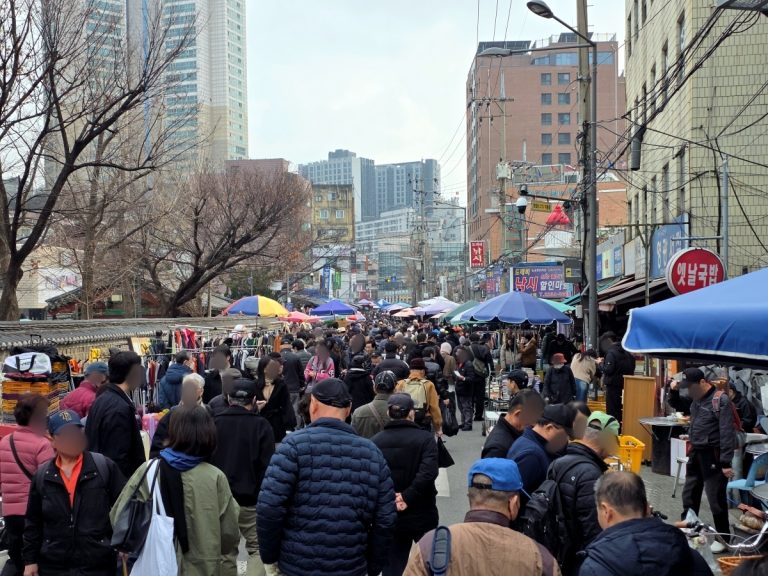
Seoul Fish Market: A Unique Experience at Noryangjin Fish Market
Seoul is famous for its palaces, traditional neighborhoods, and other historic attractions. However, if you are looking for something a little different, I recommend visiting a Seoul fish market.
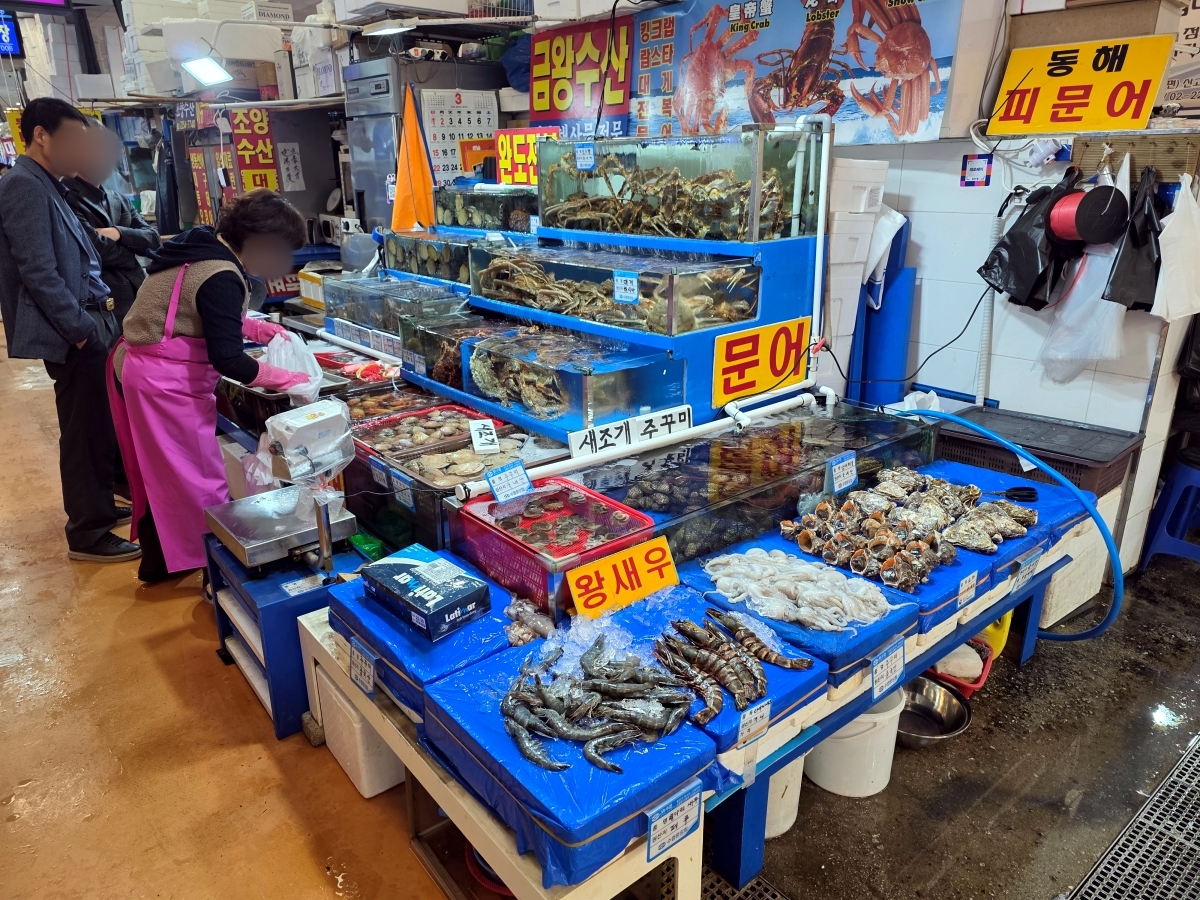
Noryangjin and Garak are the two most famous seafood markets in Seoul. Personally, I visit Noryangjin more often. To be honest, I would not say that Noryangjin Fish Market is always the cheapest place for seafood. However, even when the price is similar, the seafood often feels fresher, and the biggest advantage is the unique atmosphere that only a fish market can offer.
If you have extra time during your trip, I think it is worth visiting at least once.
Read more: Dongmyo Flea Market: A Unique Experience in Seoul
What Is Noryangjin Fish Market?
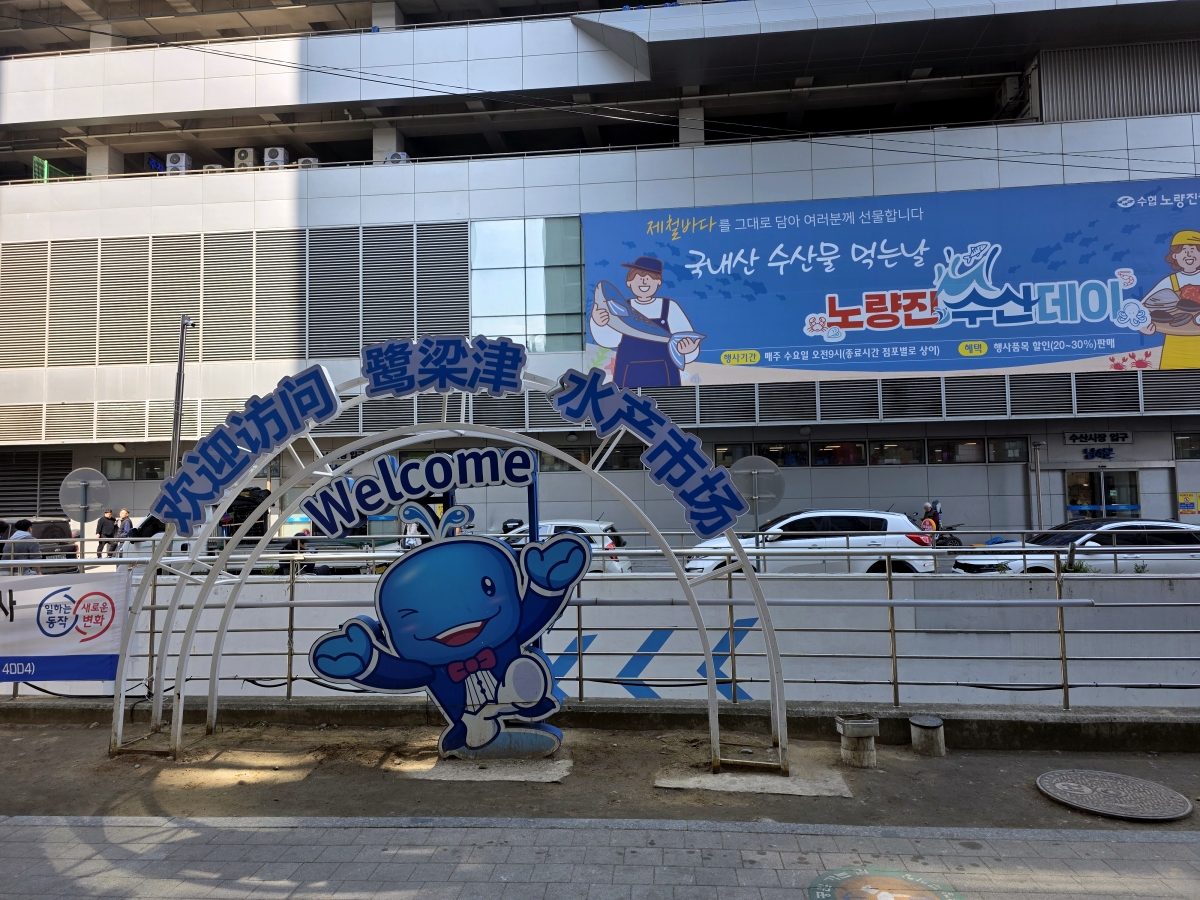
Noryangjin Fish Market is the most famous seafood market in Seoul and is well known for fresh sashimi, king crab, shellfish, and a wide range of live seafood.
Compared with some of Seoul’s more touristy places, this market does not feel overly crowded with foreign visitors. As a result, it has a more local atmosphere, which can make the experience feel more unique. On the other hand, the fact that English is not widely spoken can be inconvenient for some travelers.
Thankfully, most shops accept credit cards.
How Noryangjin Fish Market Works
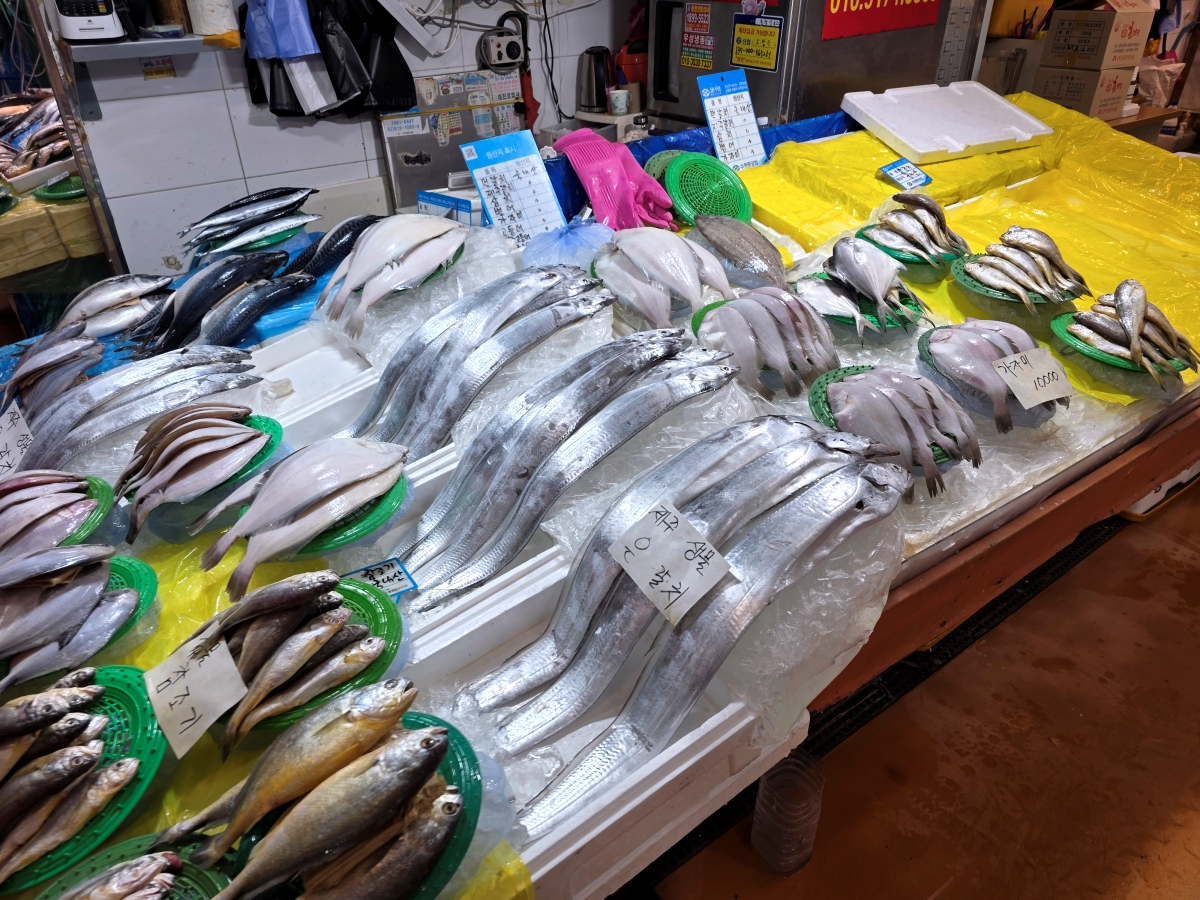
When you visit Noryangjin Fish Market for the first time, you may wonder what exactly you are supposed to do.
In the most common setup, you buy the seafood you want on the first floor, then go upstairs to the restaurant area on the second floor and have it served or cooked there.
1. Choose your seafood from a vendor
2. Pay the vendor
3. Take it to a restaurant area
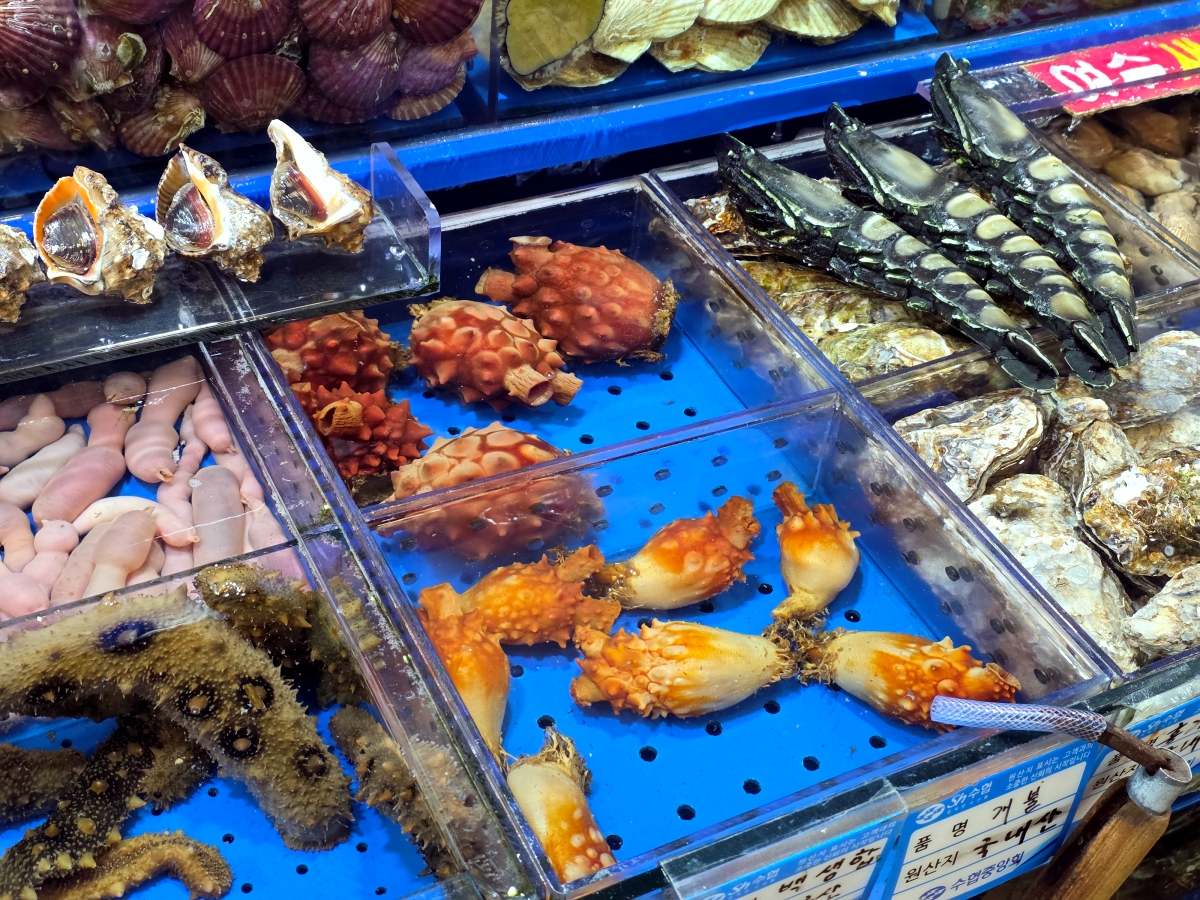
You walk through the market, look at the tanks, and decide what you want to eat. This may be flounder, king crab, octopus, abalone, or something seasonal.
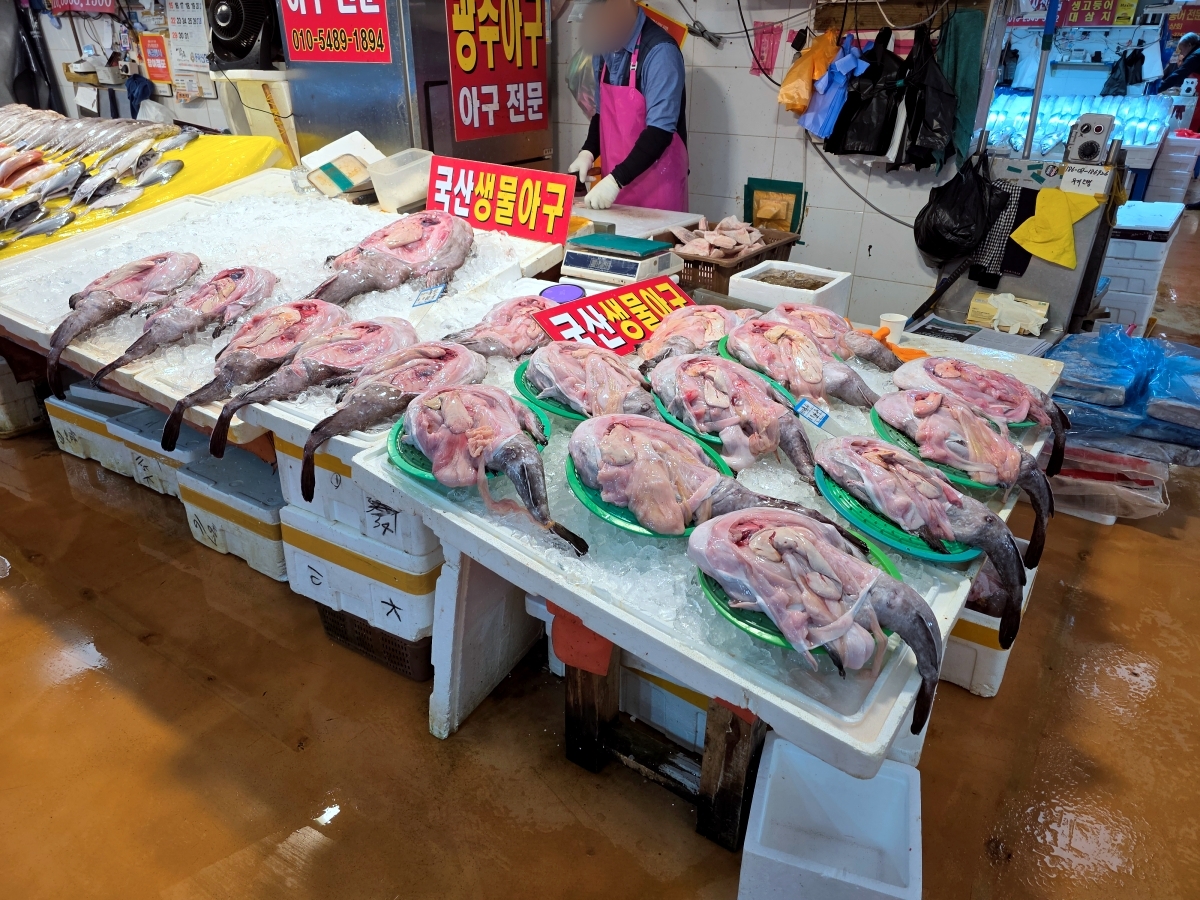
The best way to avoid being overcharged is to check the price per kilogram at several different stalls before buying. For this reason, I recommend deciding what kind of seafood you want before you even go to the market. Once you arrive, compare the prices of that item at a few shops and then make your decision.
In most cases, the prices are not dramatically different from stall to stall. Still, making that small effort can help reduce the chance of overpaying.

It is also worth remembering that seafood prices depend heavily on the season, the origin of the product, and whether it is imported or local. For example, king crab may not even be local depending on the time of year, and imported seafood can be priced very differently from Korean-caught seafood.
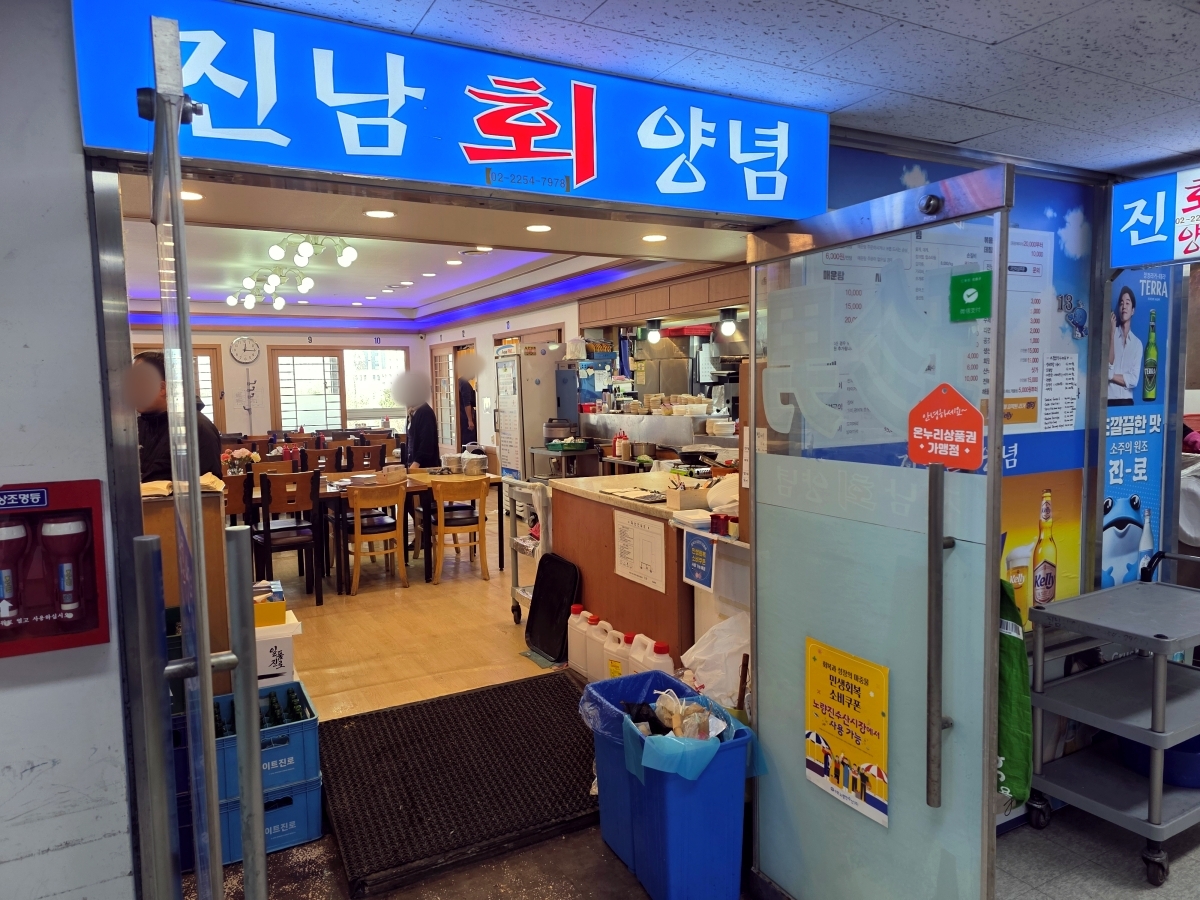
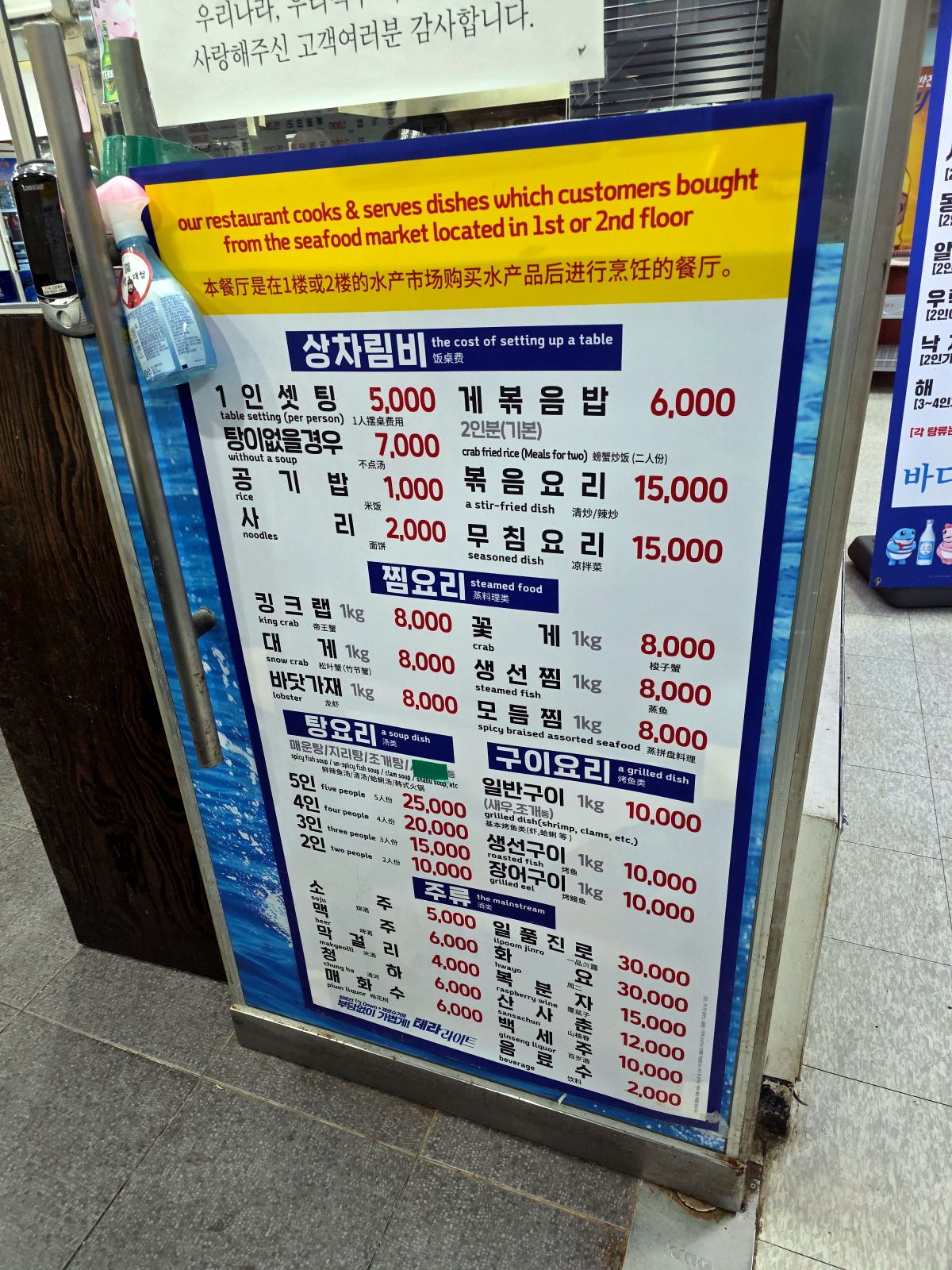
After buying your seafood, the vendor may slice the sashimi for you right away, or hand you the raw ingredients if they need to be cooked. You then take them to a restaurant upstairs, sometimes with guidance from a staff member, where they will prepare and serve everything at your table. In addition to the seafood itself, some restaurants charge a table fee, a cooking fee, or extra charges for soups and side dishes.
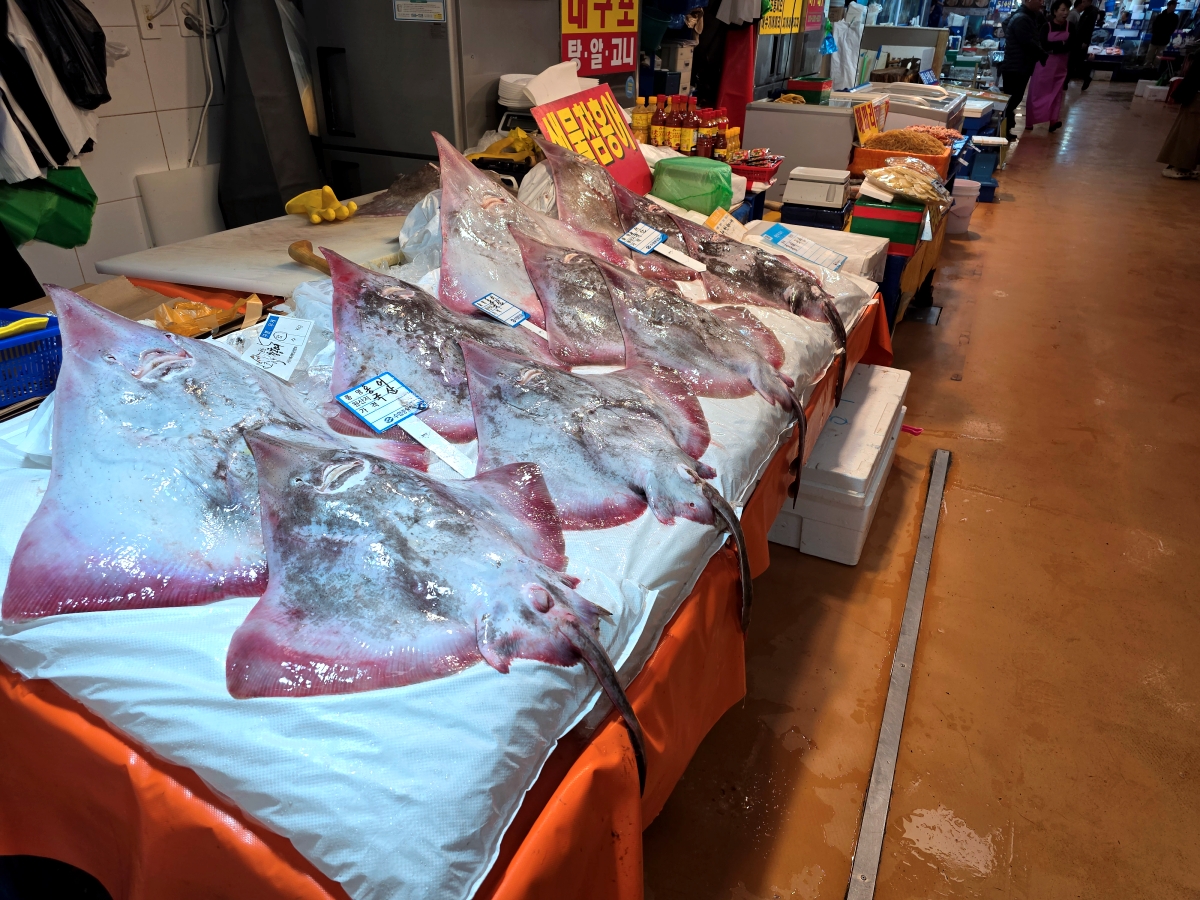
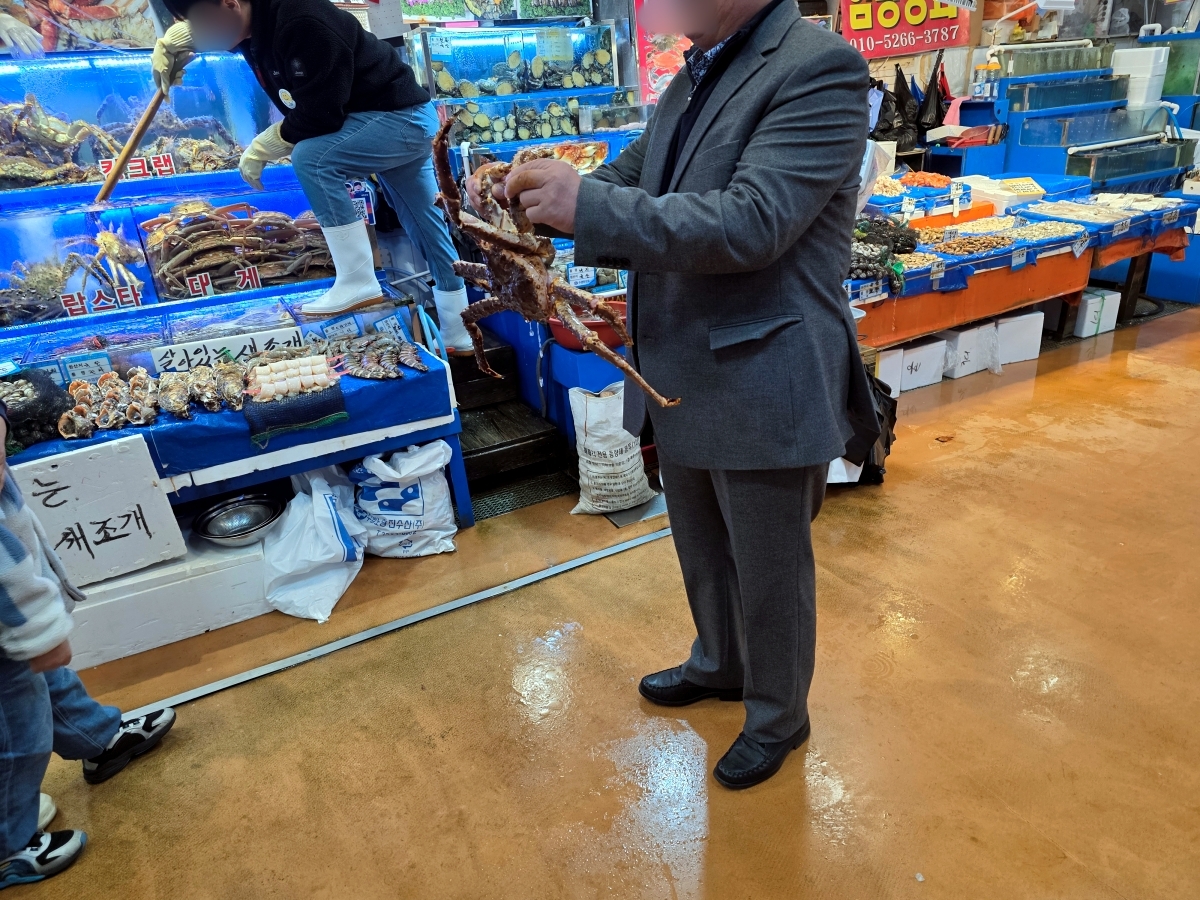
However, this is not the only way to enjoy Noryangjin.
If the whole process feels too complicated or stressful, there is a much simpler option. You can just walk around the first floor, look at the seafood tanks, and enjoy the unique fish market atmosphere. After that, you can go straight to one of the restaurants on the second floor and order from the menu there.
In many cases, the price difference is not very large. Therefore, this can actually be the easier and more comfortable option for travelers who want to enjoy the vibe of Noryangjin without dealing with the full market process.
So if you like the idea of visiting a Seoul fish market but do not want to compare stalls, check too many prices, or figure out the system in detail, ordering directly from a second-floor restaurant may be the better choice.
Don’t Worry Too Much About Sashimi Prices
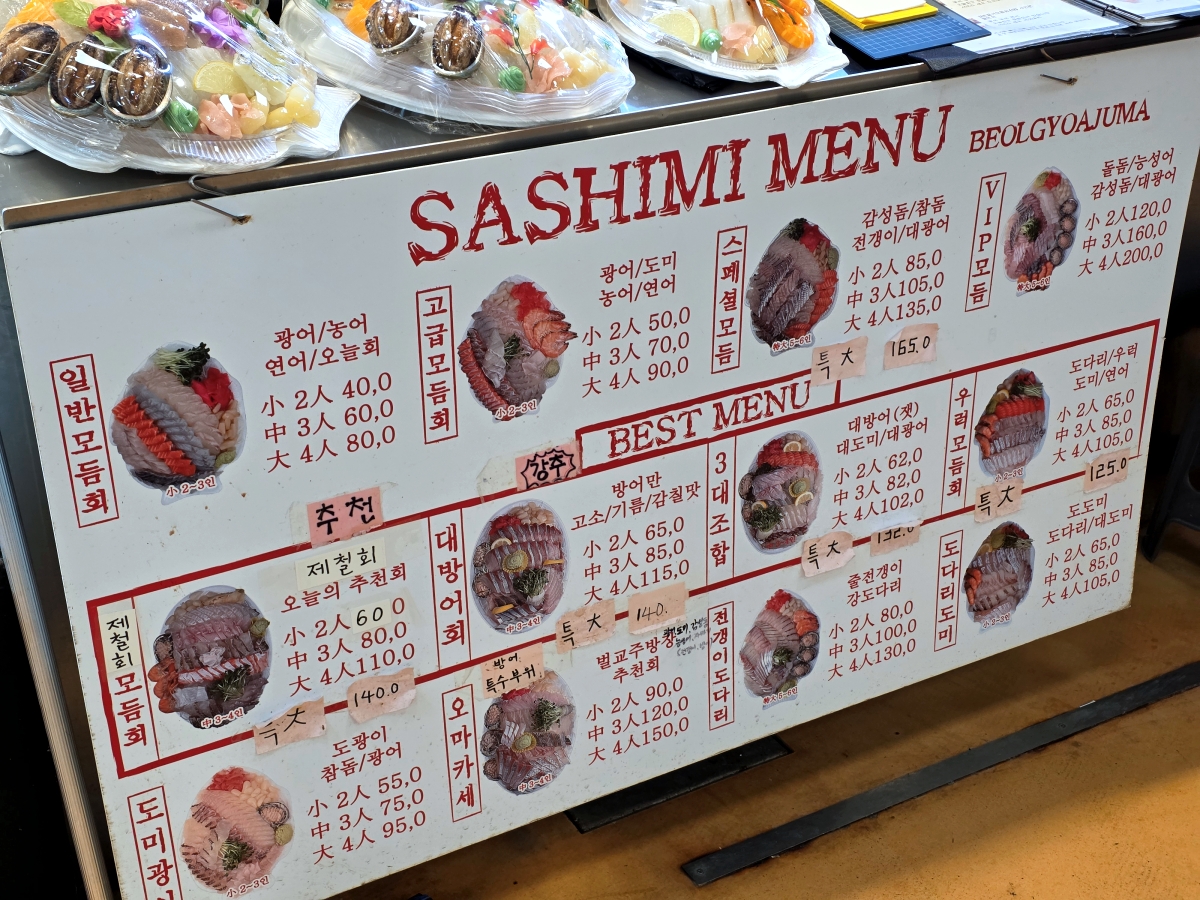
I mentioned price concerns above, but these days there are also many shops that sell fresh sashimi as fixed-price sets for two or three people.
Because the price is already set, you do not have to worry as much about whether you are being charged more just because you are a tourist. In many cases, the shops also display photos of the menu, so the process is very simple. You just choose the set you want and pay.
For travelers who feel nervous about the pricing system at a seafood market, this can be one of the easiest ways to enjoy Noryangjin.
Is Noryangjin Good for Solo Travelers?
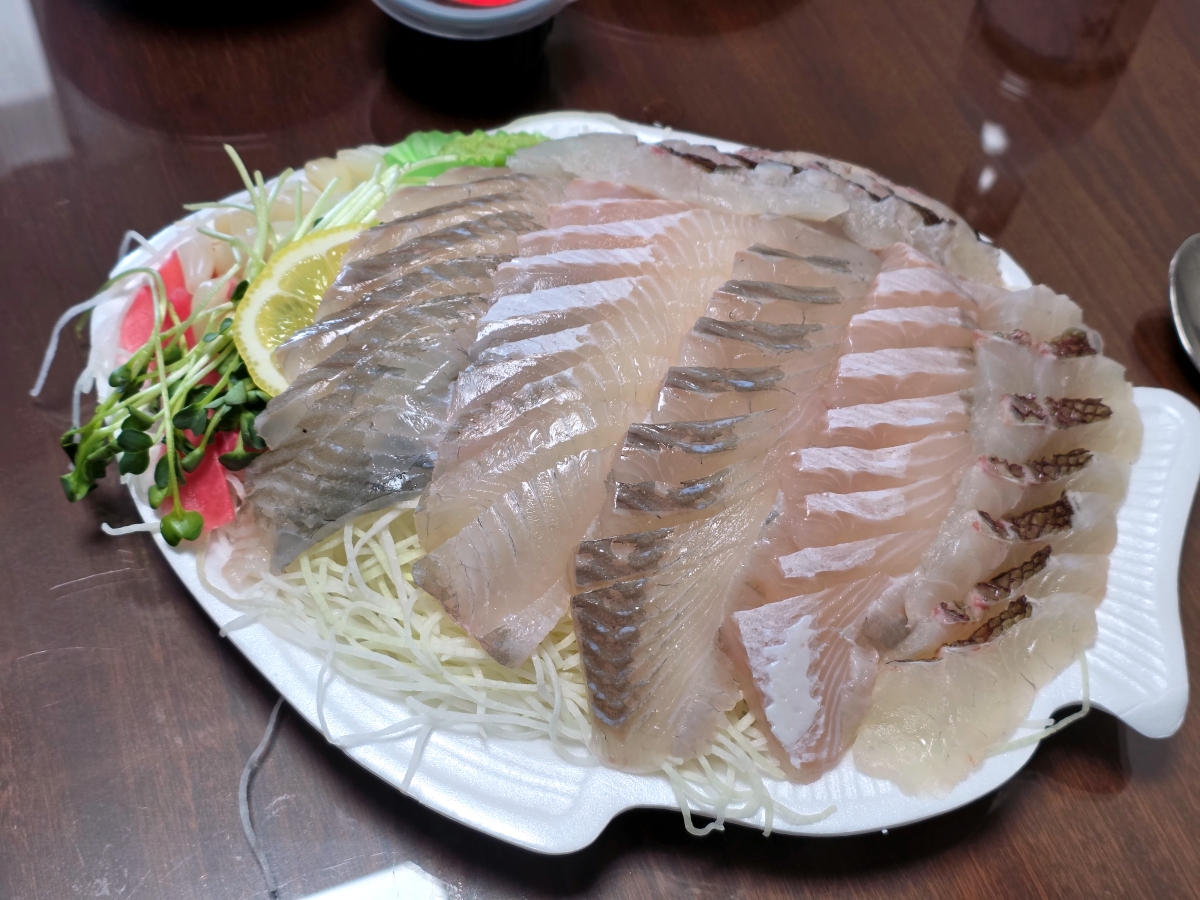
Yes, but with an important warning.
If you are going for something large like king crab or a big seafood spread, it makes much more sense with two to four people. The portions are large, and the total price can rise quickly.
On the other hand, solo travelers can still have a good experience with smaller items such as flounder sashimi or a simple sashimi set. So Noryangjin is not impossible for solo visitors, but menu choice matters a lot. If you are alone, it is better to keep your order simple rather than going for the most expensive seafood in the market.
Best Reasons to Visit Noryangjin
Noryangjin is worth considering if:
- you want a memorable seafood experience in Seoul
- you like the idea of choosing live seafood yourself
- you are traveling with at least one other person
- you enjoy places with a strong local atmosphere
- you want something more experiential than a standard restaurant meal
Reasons You Might Skip It
You may want to skip Noryangjin if:
- you do not like confusing ordering systems
- you are traveling alone and want a quick, simple meal
- you are already planning to visit coastal cities like Busan or Jeju for seafood
Conclusion
If I had to explain Noryangjin Fish Market to a first-time visitor, I would put it this way:
Noryangjin is not the best place to go just because you are hungry. It is the best place to go if you want the experience of choosing seafood at a famous Seoul fish market and turning that into a meal.
That difference matters.
If you go expecting the cheapest or easiest seafood meal in Seoul, you may leave disappointed. But if you go expecting a market experience that feels distinctly Korean and a little chaotic, it can easily become one of the most memorable meals of your trip.
As I mentioned above, the best way to enjoy Noryangjin is to decide what you want to eat before you go, compare the price per kilogram at a few stalls, and then make your purchase. If that sounds too complicated, just enjoy the first-floor market atmosphere and order directly from a second-floor restaurant instead. Either way, Noryangjin can be a fun and memorable stop if you know what to expect.
Read more: Gyeongbokgung Palace Tour: Free Guided Tour Schedule
Frequently Asked Questions (FAQ)
It can be worth visiting if you want a unique fish market experience in Seoul.
In the most common setup, you choose seafood from a vendor on the first floor, pay for it, and then take it to a restaurant on the second floor where it is served or cooked. If that feels too complicated, you can also skip the buying process and order directly from a second-floor restaurant.
It can be. Prices depend on the type of seafood, the season, and whether it is local or imported. Many travelers worry about overpaying, so checking visible prices is important.
Yes, but smaller items like flounder sashimi usually make more sense than large seafood platters or king crab.
Yes, the area itself is generally considered safe. The bigger challenge is understanding the buying process, not personal safety.
Some vendors may speak basic English, but many do not. It helps to have a translation app on your smartphone.
Not always. Seafood in Busan or Jeju may offer a better overall experience. If you are already planning to visit Busan or Jeju, it may make sense to skip Noryangjin.