Gyeongbokgung Palace Tour: Free Guided Tour Schedule
Disclosure: This post may contain affiliate links. If you click and make a purchase, I may earn a commission at no extra cost to you. Read more
If you are planning a Gyeongbokgung Palace tour, joining the official guided tour is one of the best ways to understand the history of Korea’s most important royal palace.
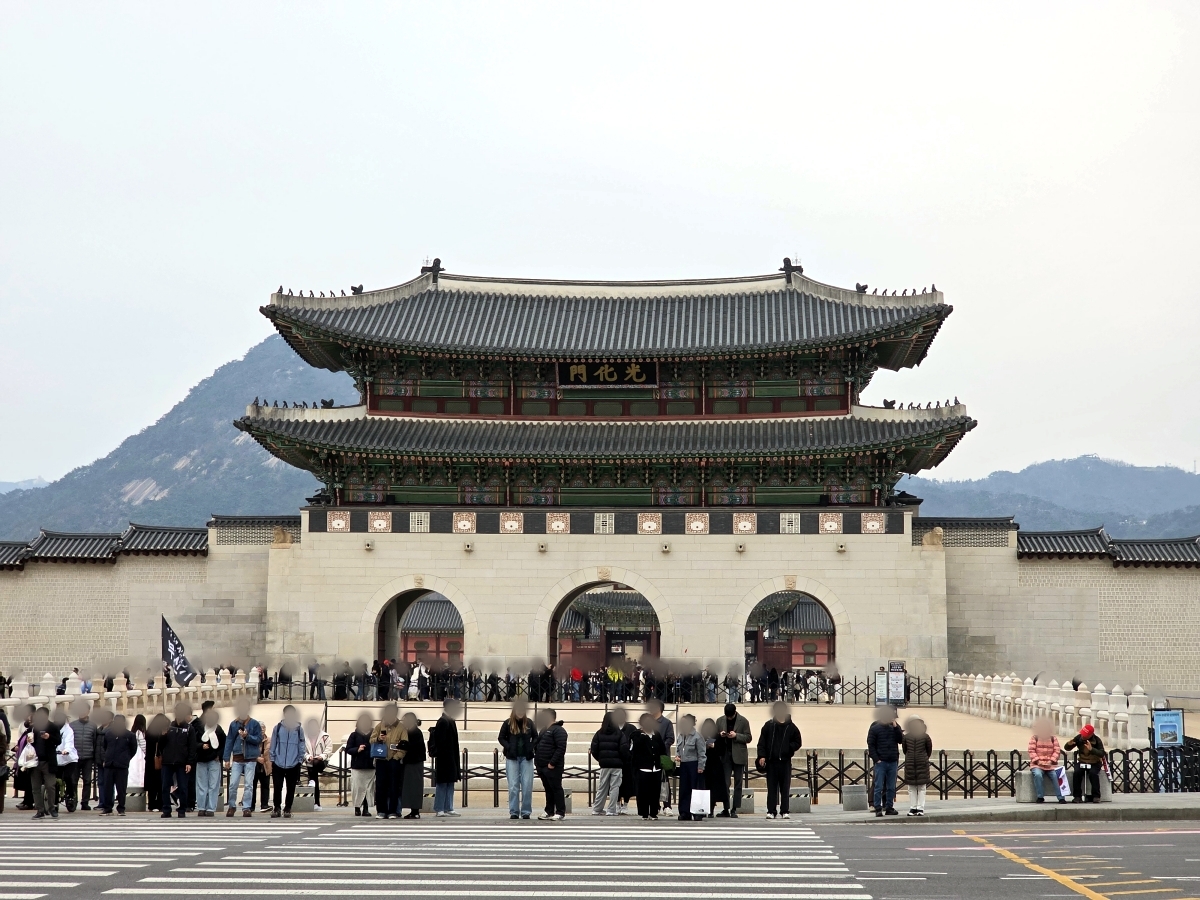
Many visitors simply walk around the palace and take photos. However, the buildings hold stories spanning more than 500 years of history. Because a guide explains the meaning behind the architecture, the palace becomes much more interesting.
During my visit, I joined the free guided tour for foreign visitors and followed the guide for about an hour. It helped me understand the history and layout of the palace much better.
Gyeongbokgung Palace Tour
Gyeongbokgung Palace offers free guided tours in several languages for international visitors. The tours are conducted by official palace guides and usually last about one hour.
Below is the current free guided tour schedule for international visitors at Gyeongbokgung Palace.
Gyeongbokgung Palace Guided Tour Schedule
| Language | Days | Times |
|---|---|---|
| English | Mon, Wed, Thu, Fri, Sat, Sun (Except Tue) | 11:00, 13:30, 15:30 |
| Japanese | Mon, Wed, Thu, Fri, Sat, Sun (Except Tue) | 10:00, 14:30 |
| Chinese | Mon, Wed, Thu, Fri, Sat, Sun (Except Tue) | 10:30, 15:00 |
| Spanish | Fri, Sat | 10:30, 15:00 |
| French | Wed, Thu | 11:00, 15:00 |
The schedule may change depending on the season or palace operations. It is recommended to check the official website before visiting.
Note: Gyeongbokgung Palace is closed every Tuesday.
Getting to the Ticket Office
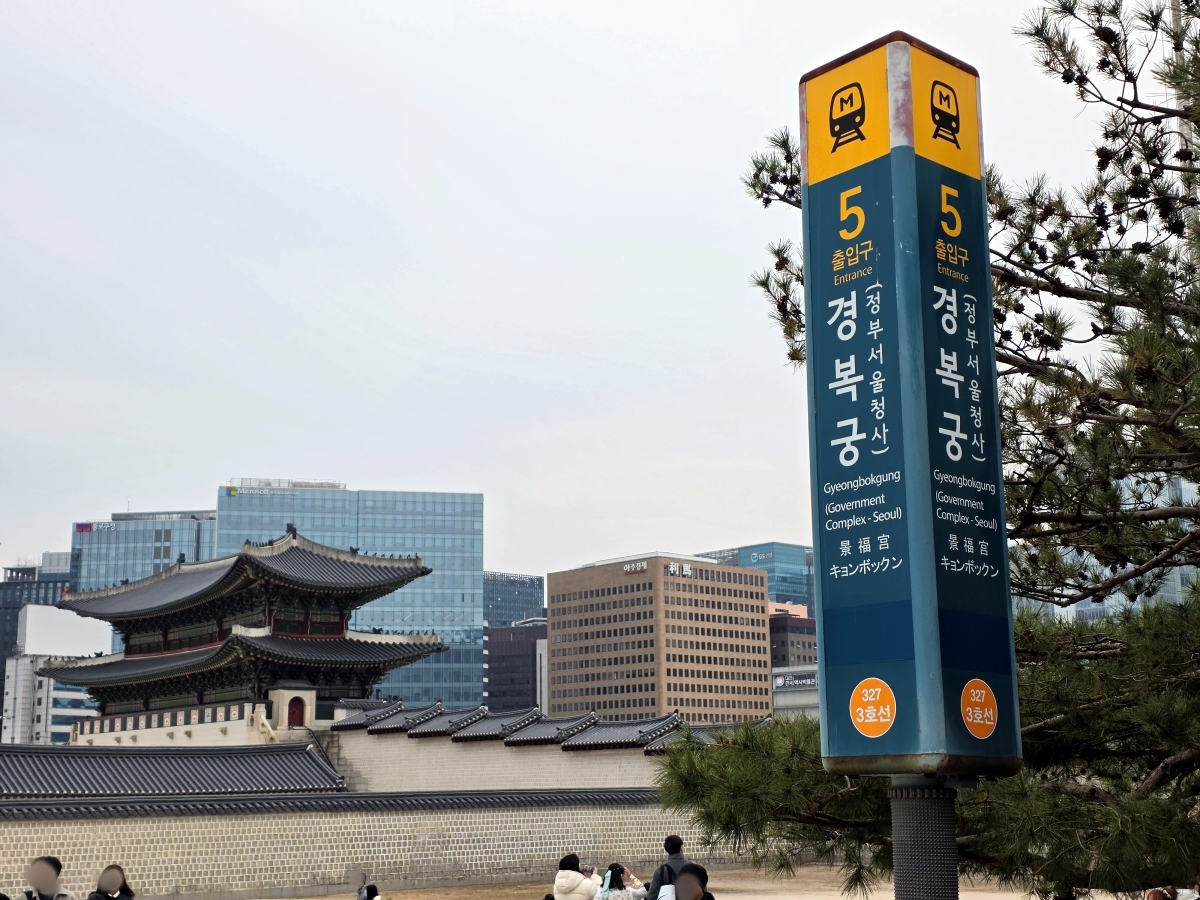
The easiest way to reach the palace is through Gyeongbokgung Station on Subway Line 3.
Get off at Gyeongbokgung Station and exit through Exit 5. From the exit, walk toward the main palace gate rather than the National Palace Museum building.
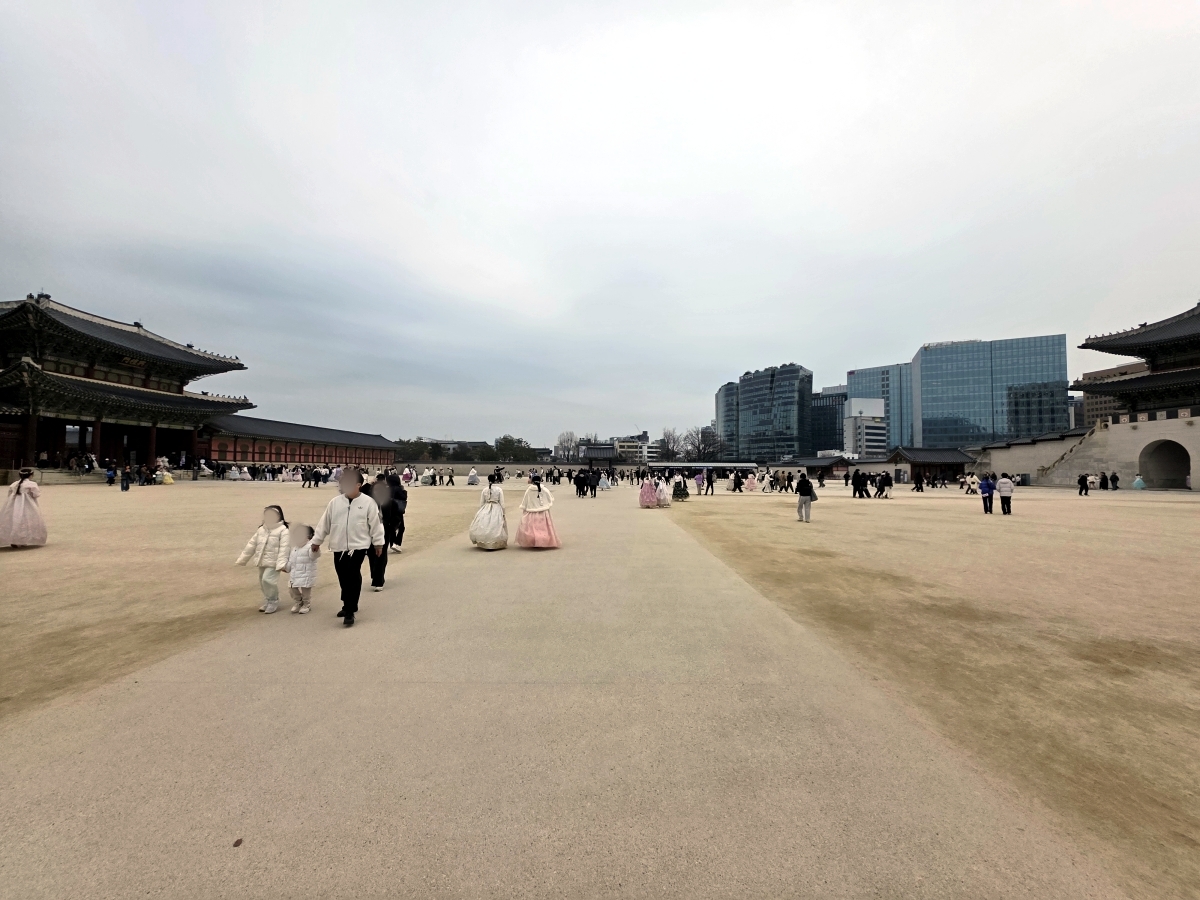
After exiting the station, you will see a large open plaza in front of the palace area. Walk across the large plaza toward the palace entrance, and you will find the ticket office there.
Entrance Fee (Free with Hanbok)
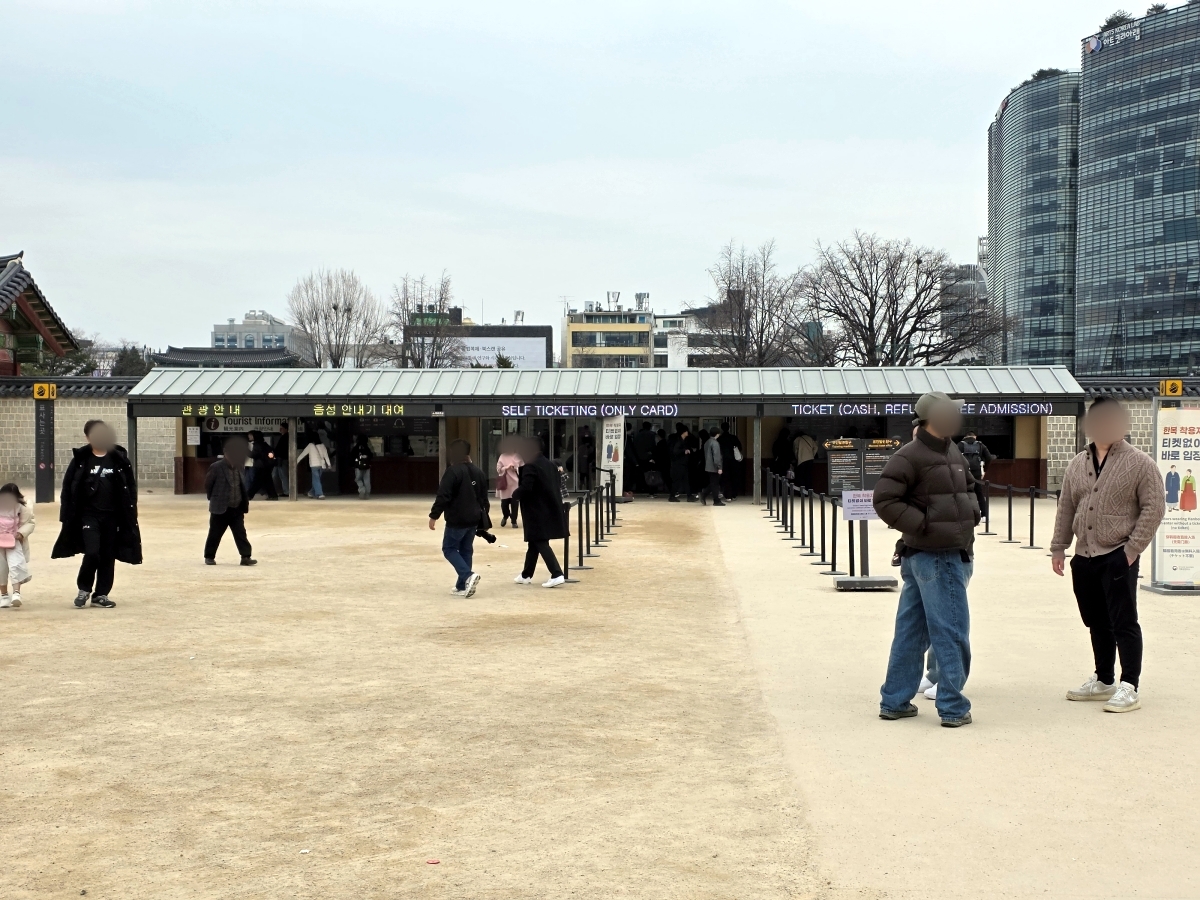
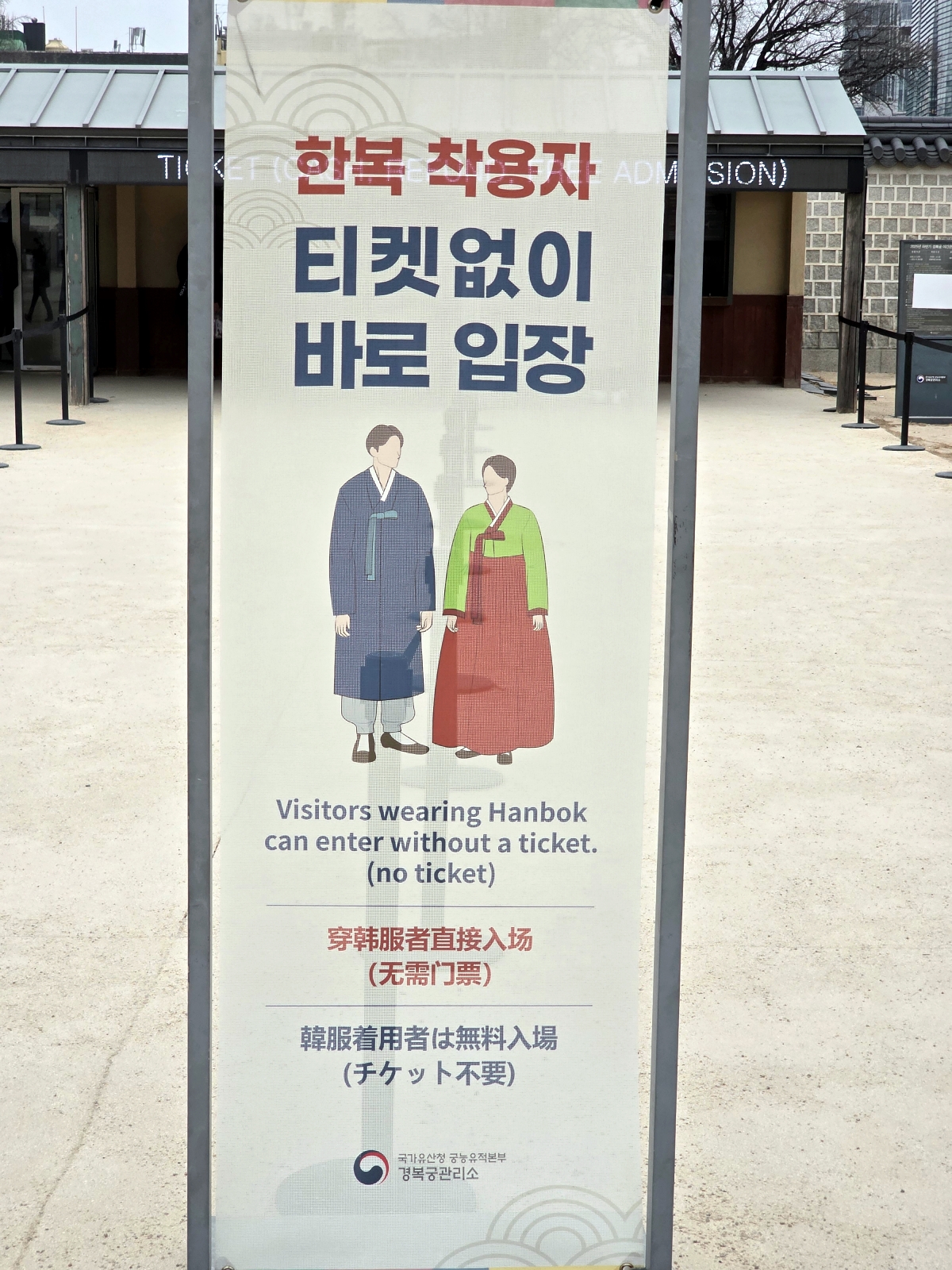
The entrance fee for Gyeongbokgung Palace is 3,000 KRW.
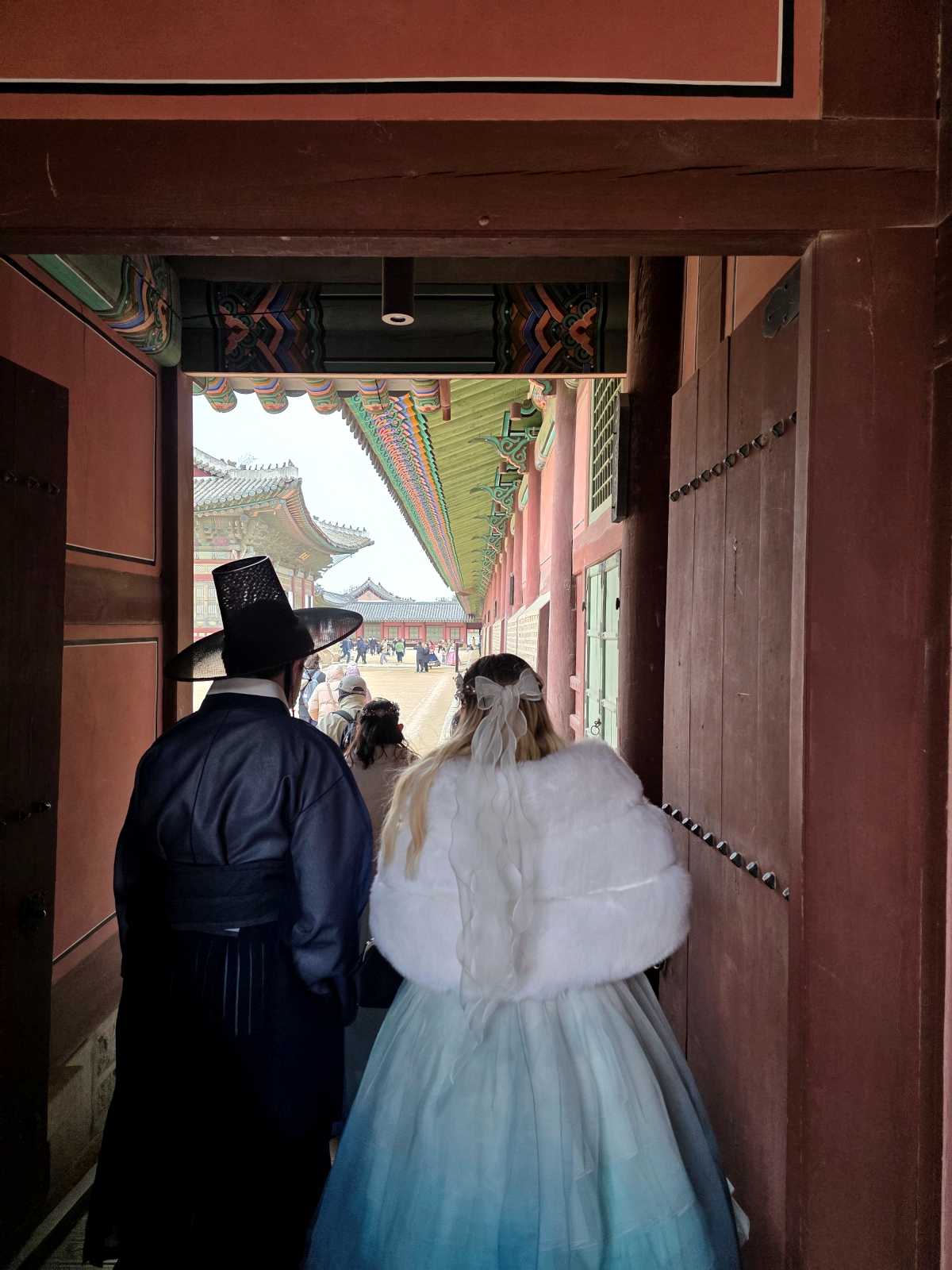
However, if you are wearing traditional Korean Hanbok, admission is free. In that case, you do not need to buy a ticket before entering the palace.
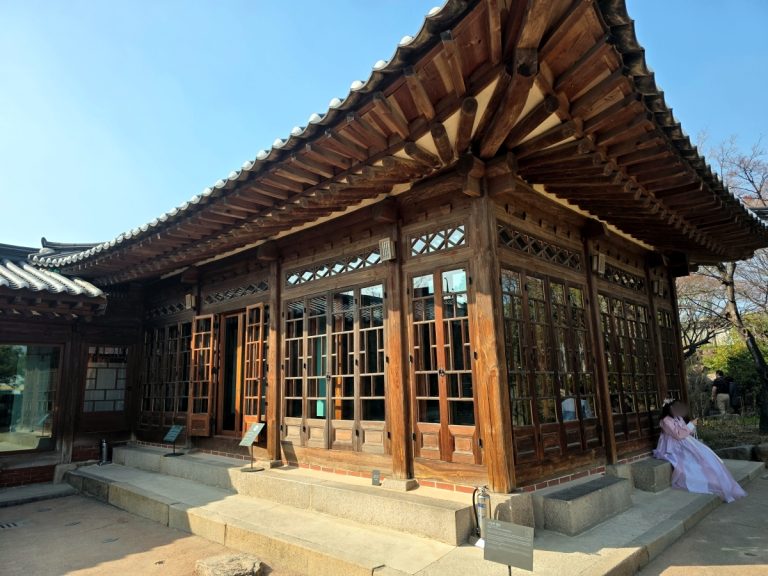
Many visitors rent Hanbok nearby before entering the palace. Walking through the palace in Hanbok also makes the experience feel more immersive and creates beautiful photos with the traditional buildings.
You may be interested in:
Audio Guide Option
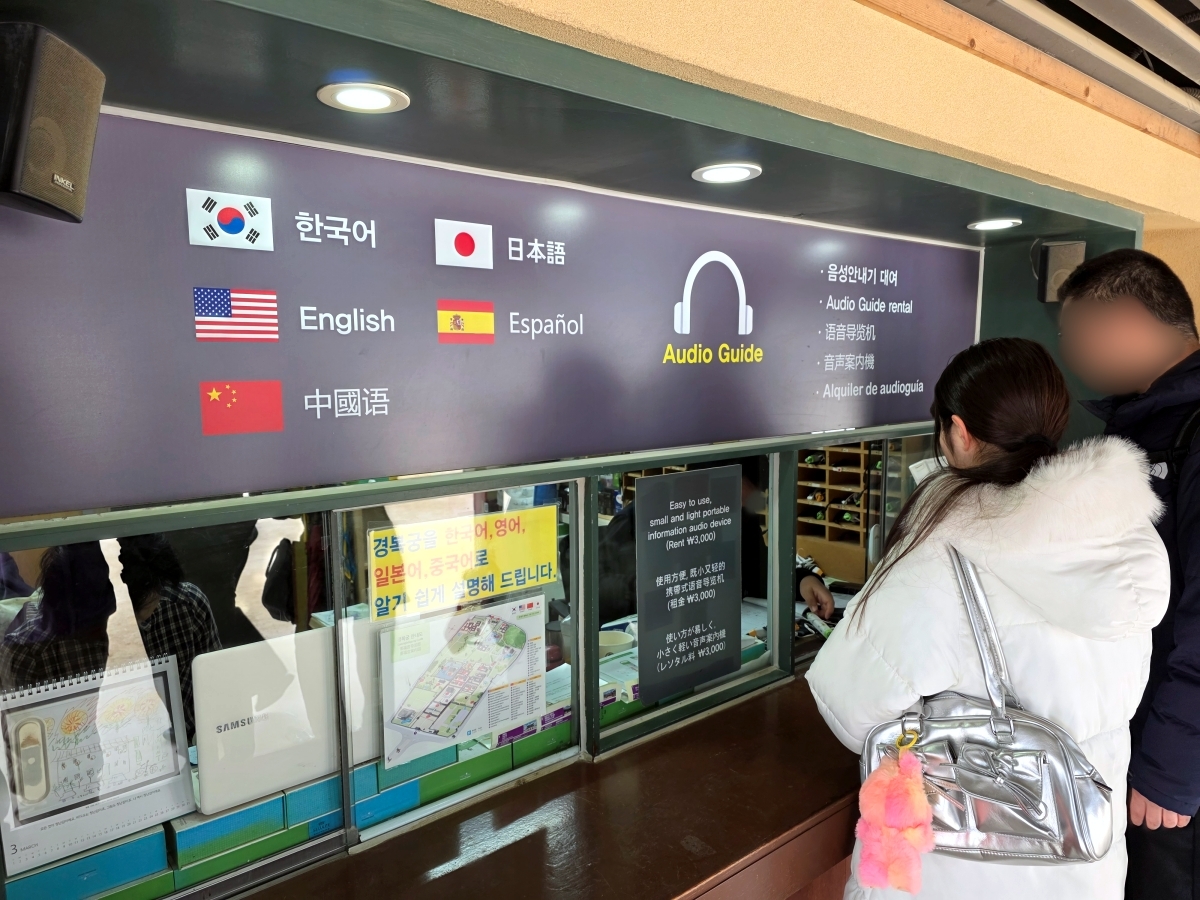
If you cannot join the guided tour at the scheduled time, you can rent an audio guide inside the palace.
The rental fee is 3,000 KRW.
The audio guide allows you to explore the palace at your own pace while listening to explanations about the buildings and their historical significance.
Where the Guided Tour Starts
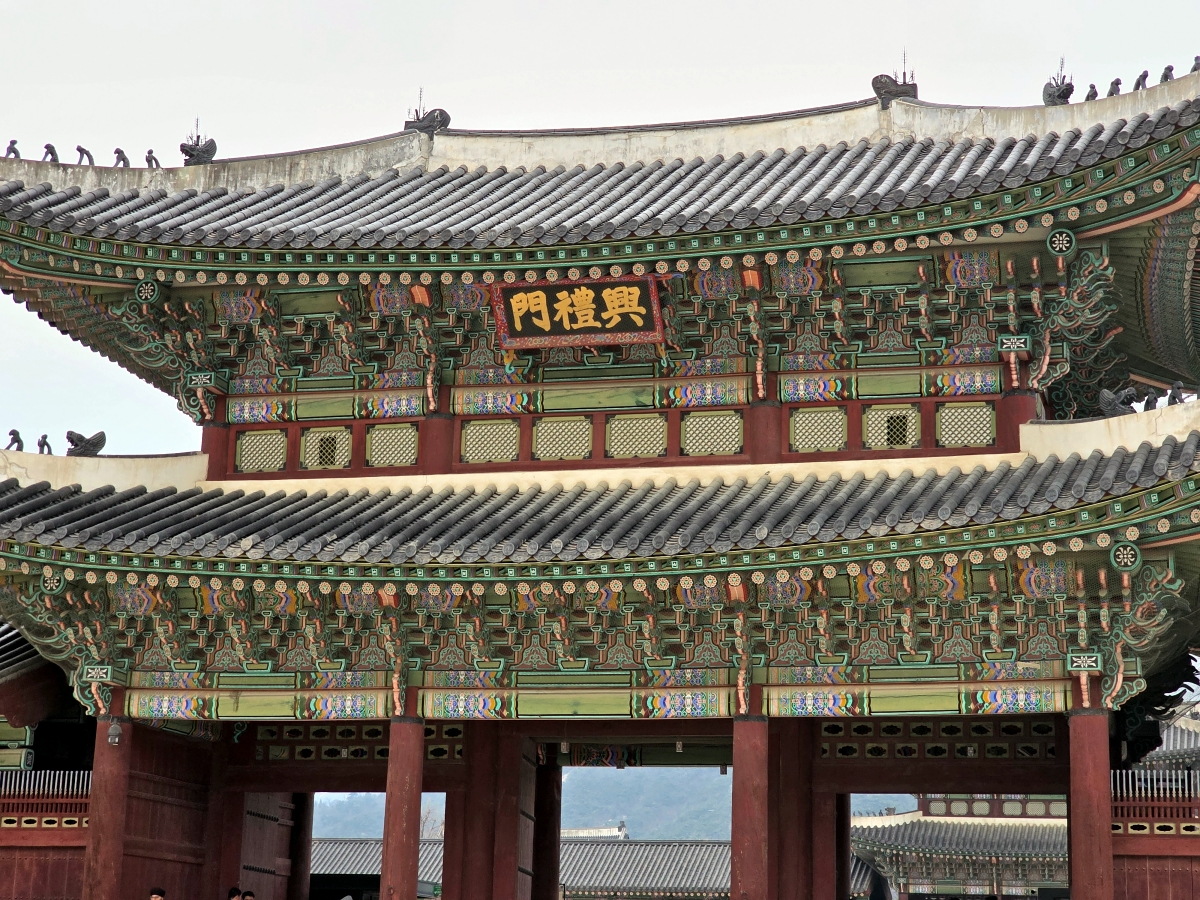
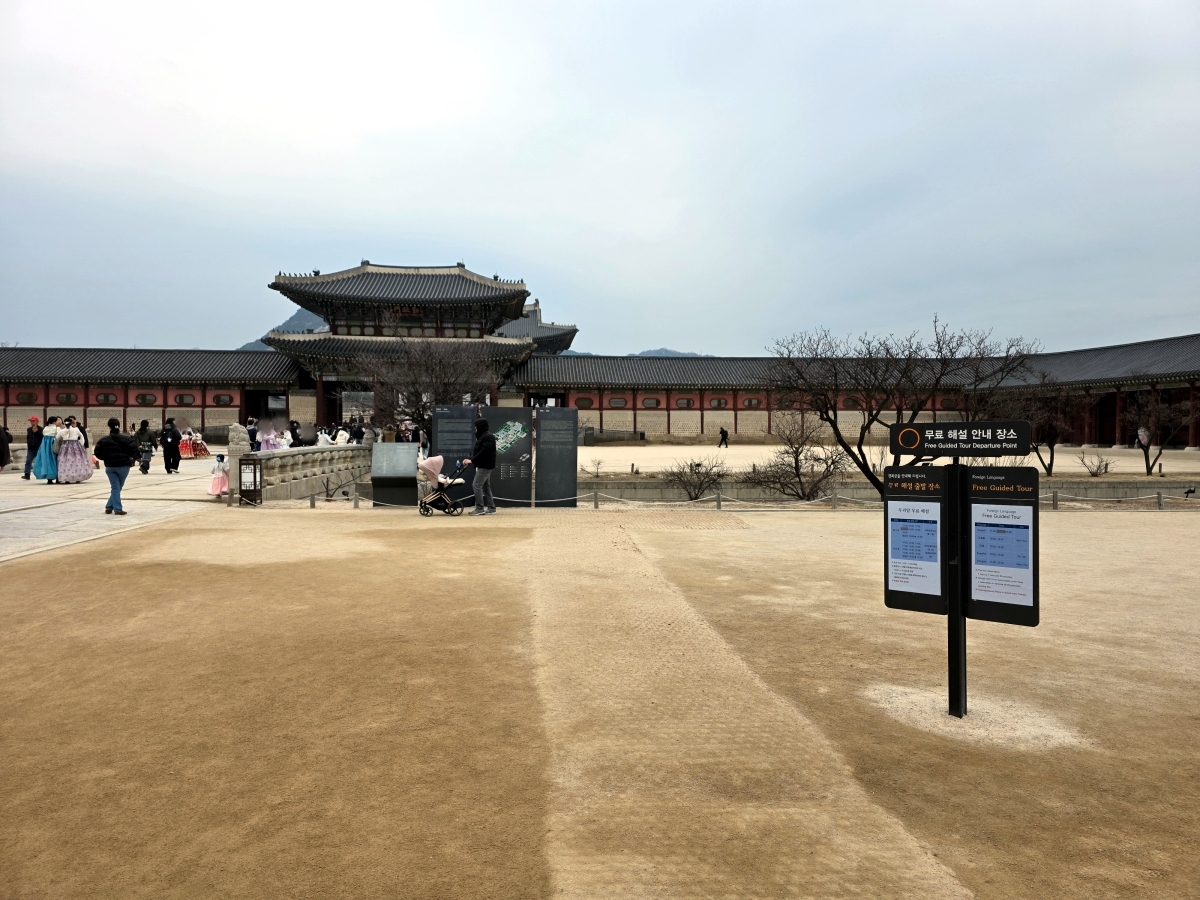
After purchasing your ticket, you will enter the palace and pass through the ticket inspection area at Heungnyemun Gate.
Many visitors assume the tour begins at the information center next to the ticket office outside the palace, but that is not correct.
The meeting point is actually inside the palace.
After passing through the ticket inspection area at Heungnyemun Gate, turn immediately to the right. The tour meeting point is next to the information center inside the palace.
Photo Spot Near the Entrance
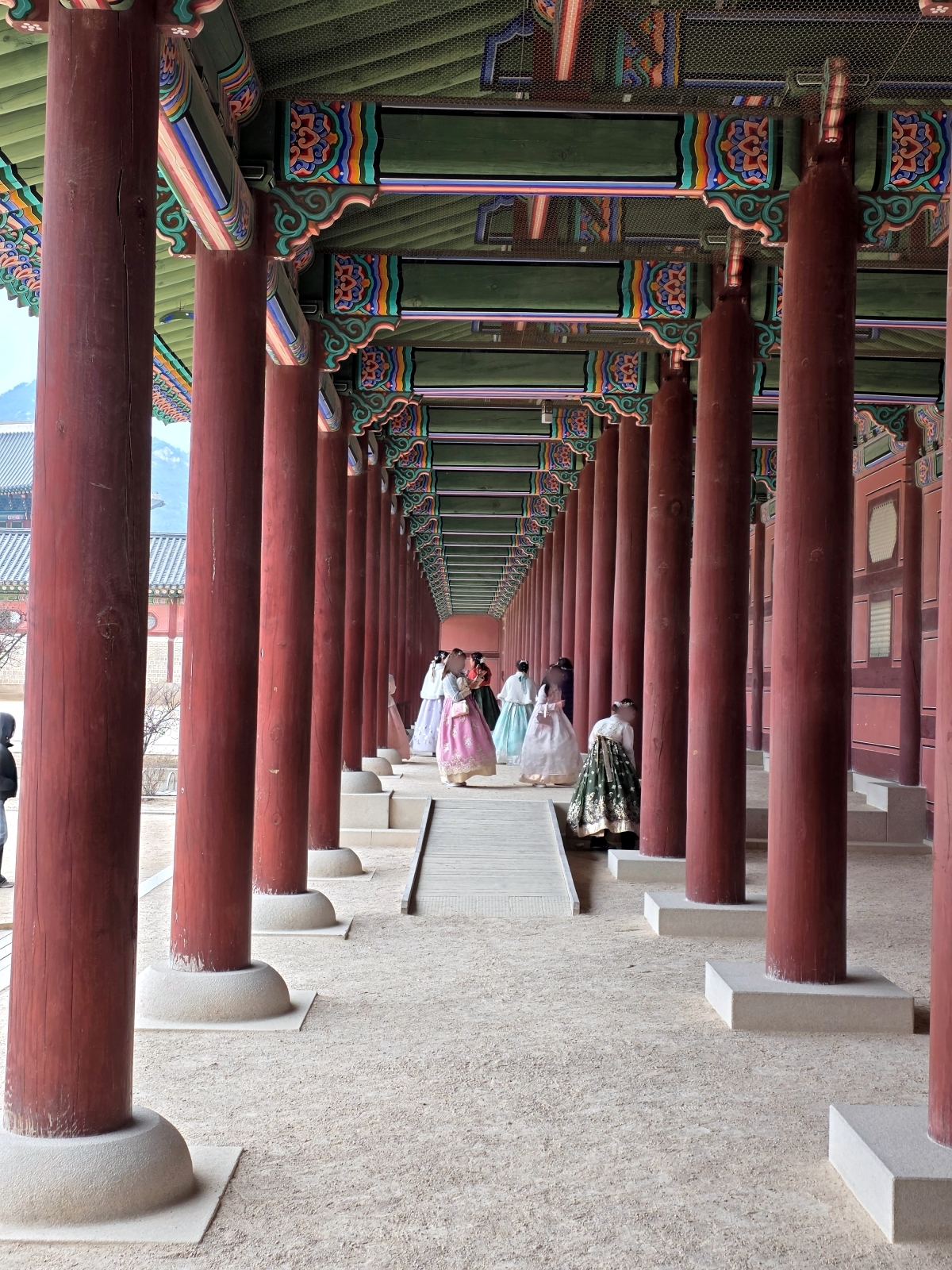
If you arrive a little early before the tour starts, there is a nice photo spot near the entrance area.
In the courtyard close to the gate, there are rows of wooden poles that create a natural frame for photos. Standing between these poles can create a balanced composition with the palace buildings visible in the background.
Highlights of the Gyeongbokgung Palace Tour
During the Gyeongbokgung Palace tour, the guide walks visitors through several important locations while explaining the history of the Joseon Dynasty and the meaning behind the palace architecture.
Introduction to the Palace
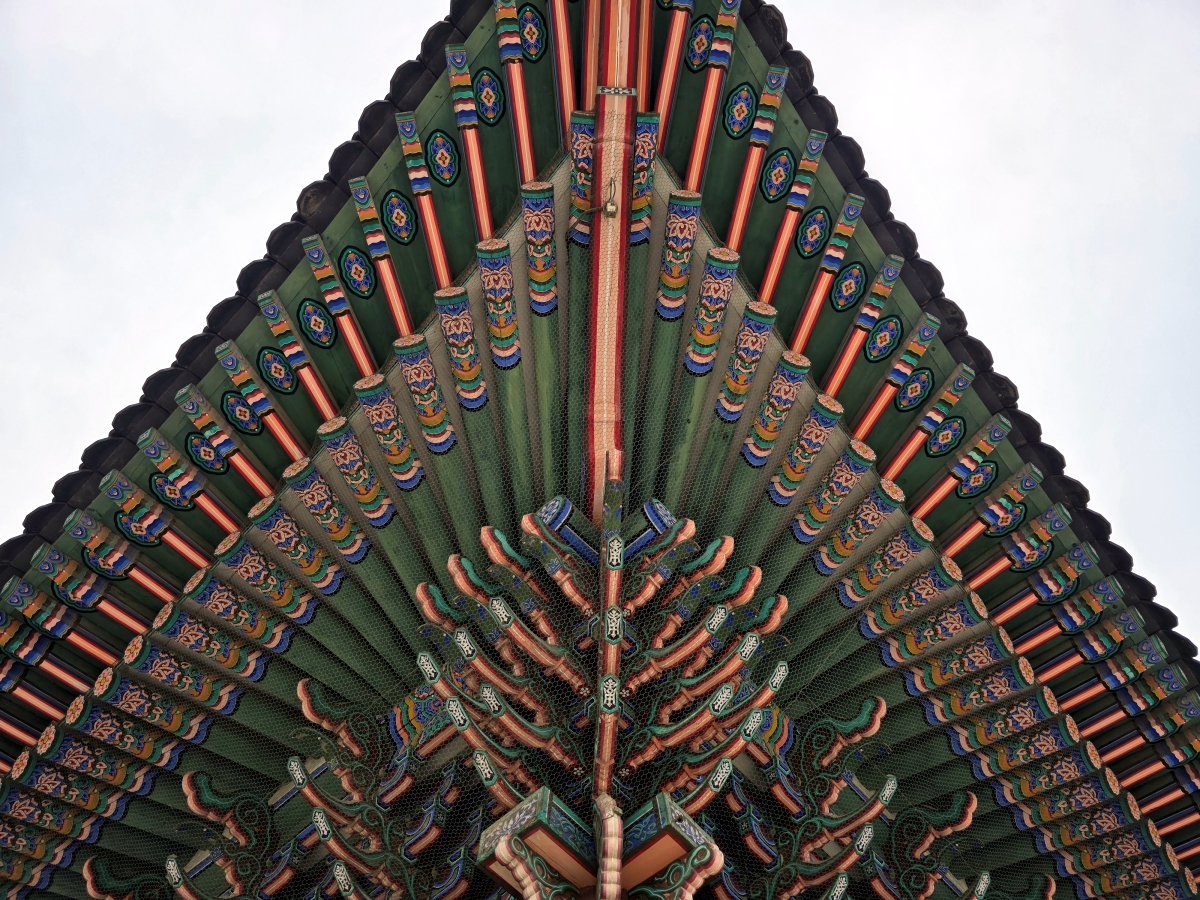
First, the tour usually begins with a brief explanation of the palace itself.
Gyeongbokgung Palace was first built in 1395, shortly after the founding of the Joseon Dynasty.
Soon afterward, it became the main royal palace and the political center of the kingdom.
In addition, the palace follows traditional Korean geomancy principles. The mountains behind the palace and the open land in front were believed to create an ideal balance of natural energy.
The Royal Path at the Palace Gate
As you walk through the palace gates, you may notice three separate stone paths.
The middle path is slightly wider and sits higher than the other two. This was the royal path, which only the king was allowed to use.
Meanwhile, officials and other visitors had to walk along the paths on either side.
Geunjeongjeon Hall – The Throne Hall
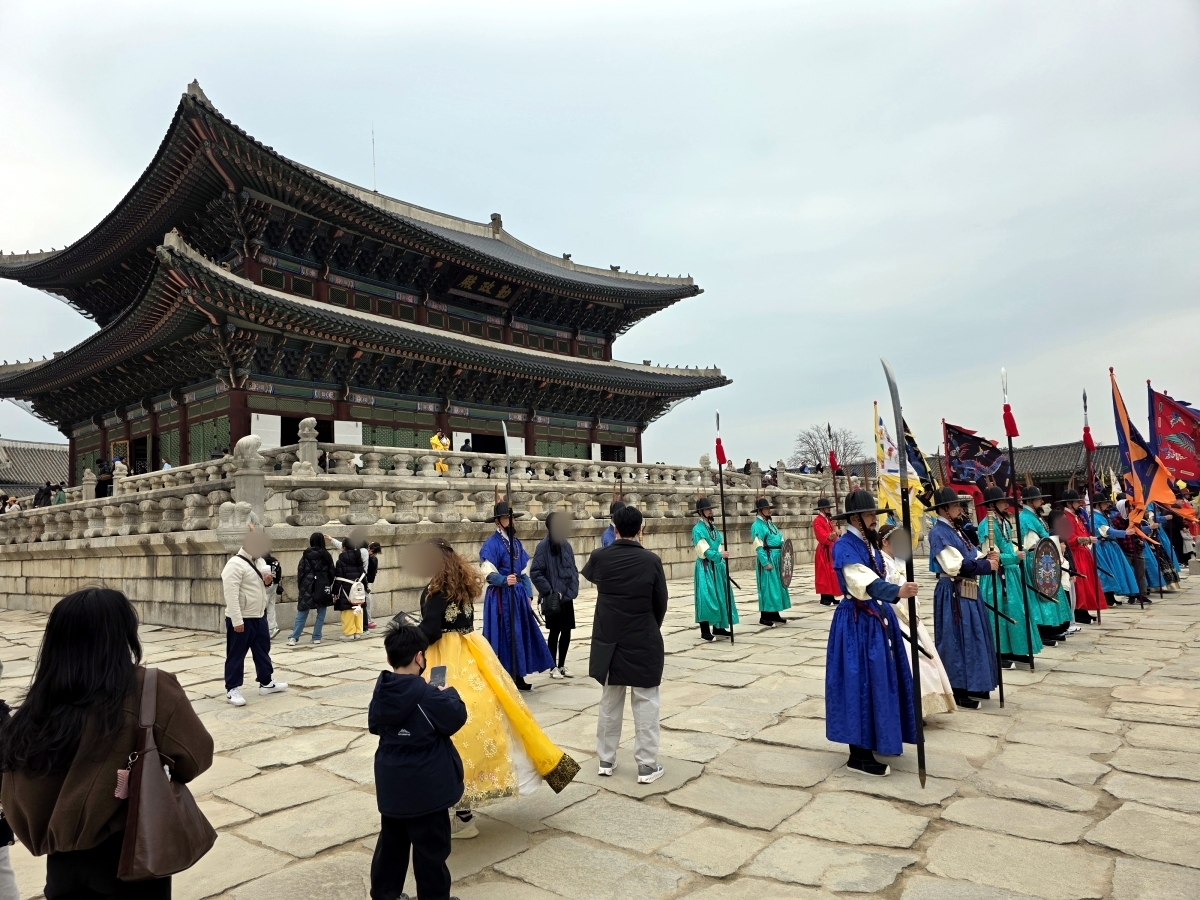
One of the most important buildings in the palace is Geunjeongjeon Hall.
This building served as the throne hall, where major national ceremonies were held. Events such as coronations, meetings with foreign envoys, and important royal ceremonies took place here.
The original building dates back to 1395, but Japanese invasions destroyed it in 1592. King Gojong rebuilt the palace in 1867.
The Rank Stones in the Courtyard
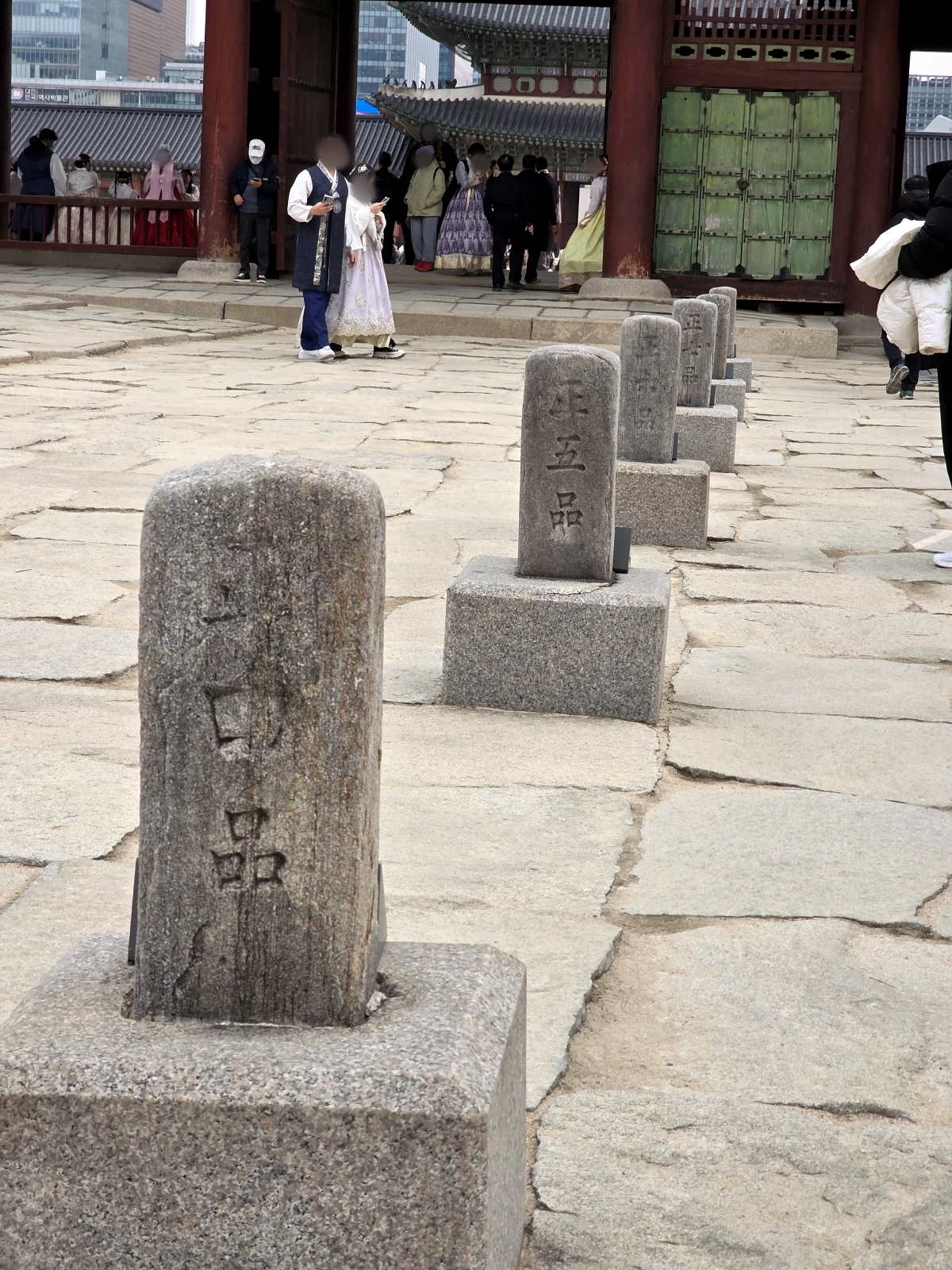
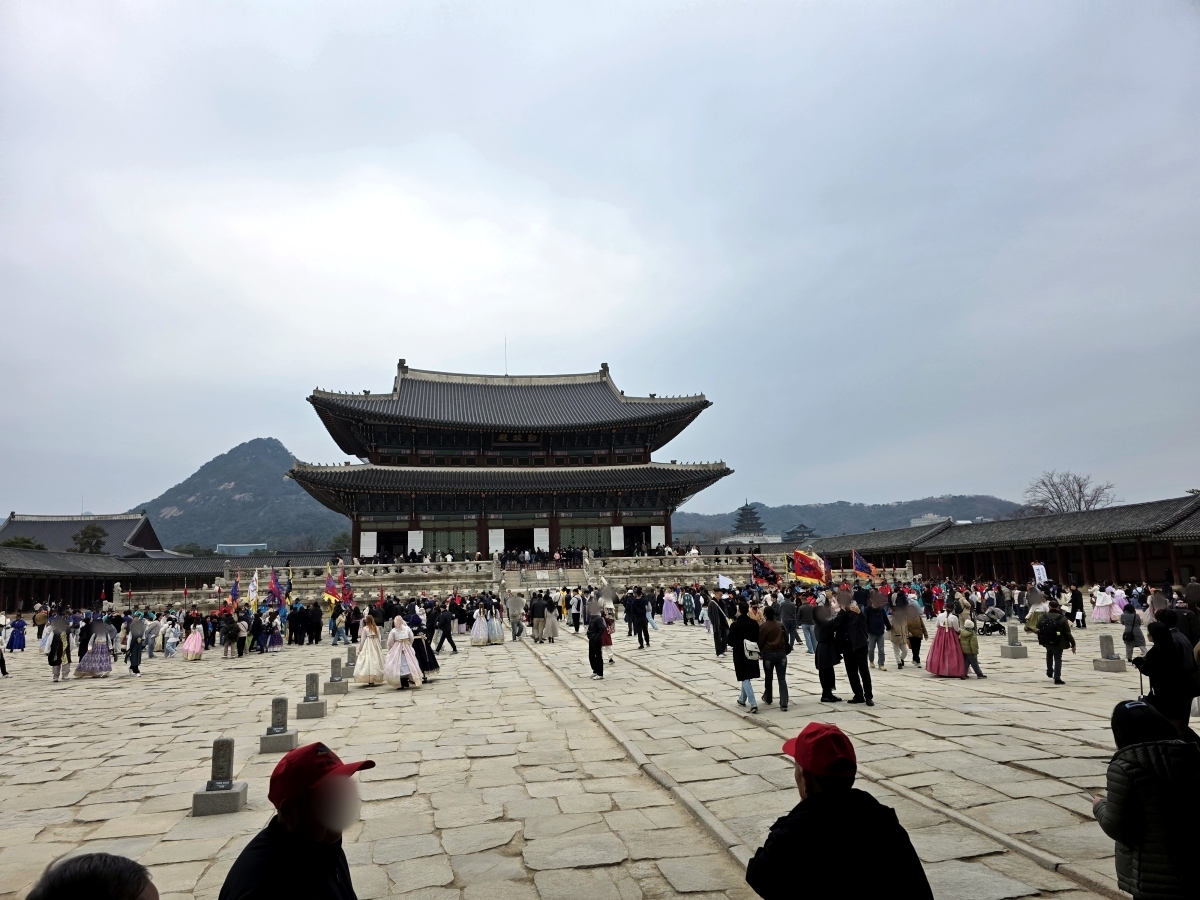
In front of Geunjeongjeon Hall is a large courtyard.
You will notice rows of stone markers placed across the courtyard. People call these stones Pumgyeseok, or rank stones.
During royal ceremonies, government officials stood in this courtyard according to their rank. High-ranking officials stood closer to the throne hall, while lower-ranking officials stood farther away.
Symbols Inside the Throne Hall
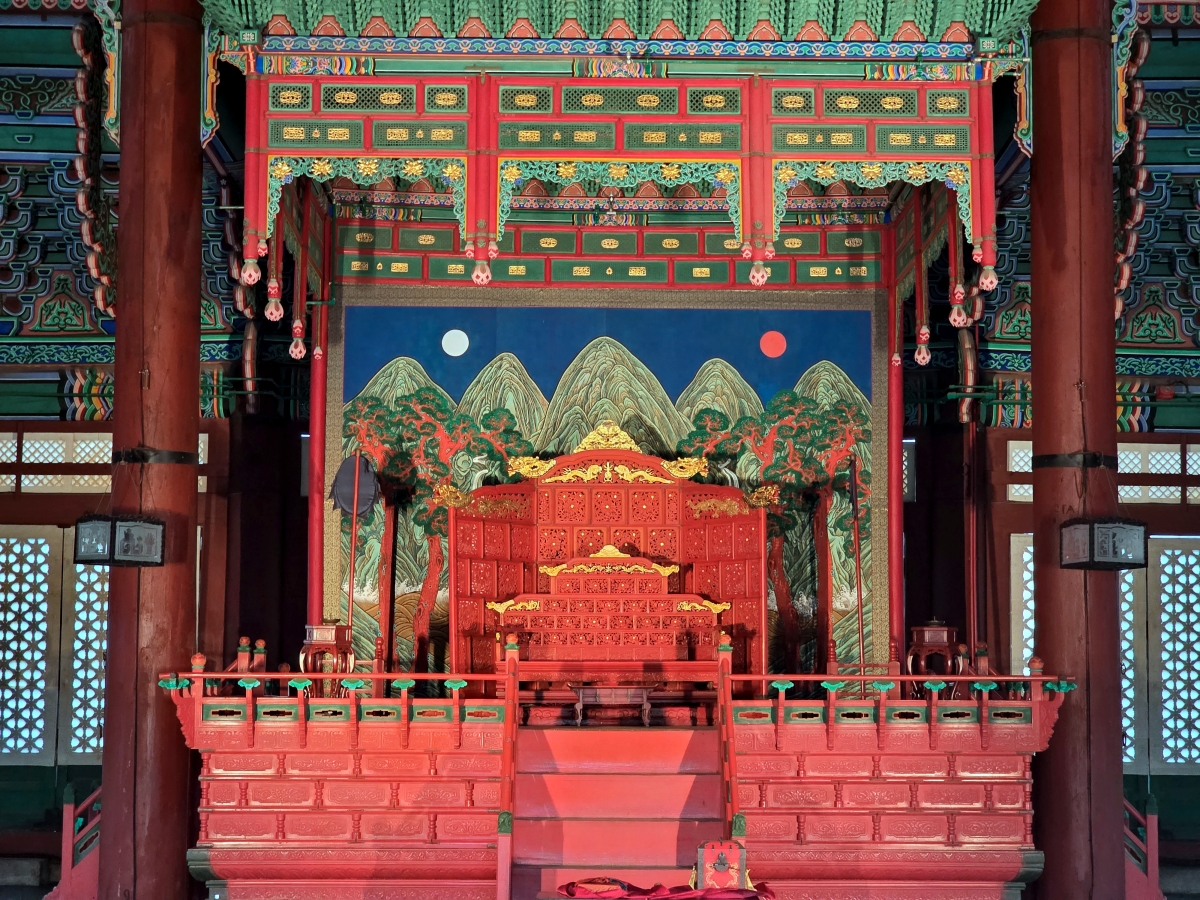
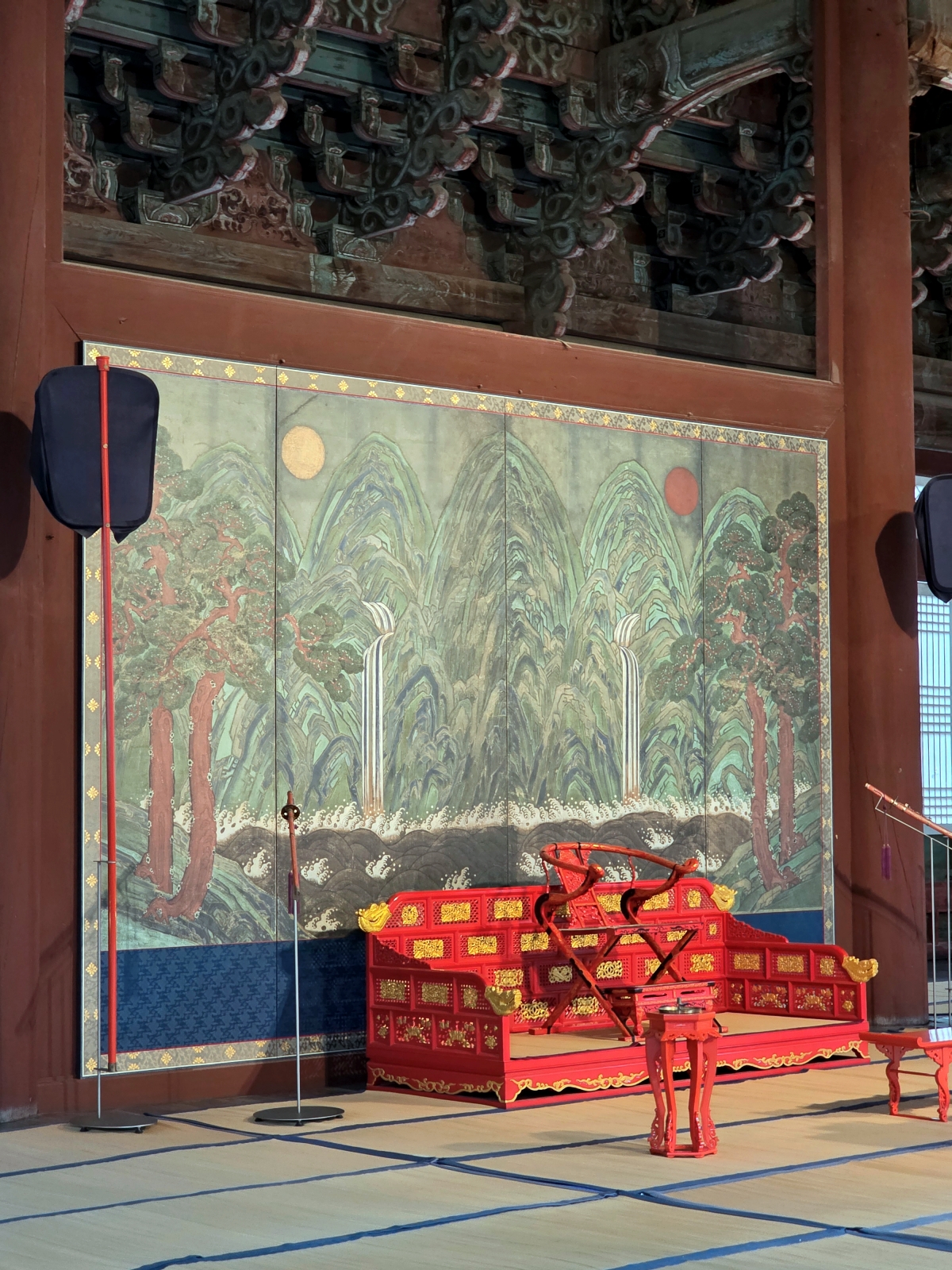
Inside the throne hall is the king’s throne.
Behind it, you will also see a folding screen called Irworobongdo, which depicts the sun, the moon, and five mountain peaks. The painting symbolizes the universe and reinforces the authority of the king.
Zodiac Animal Statues
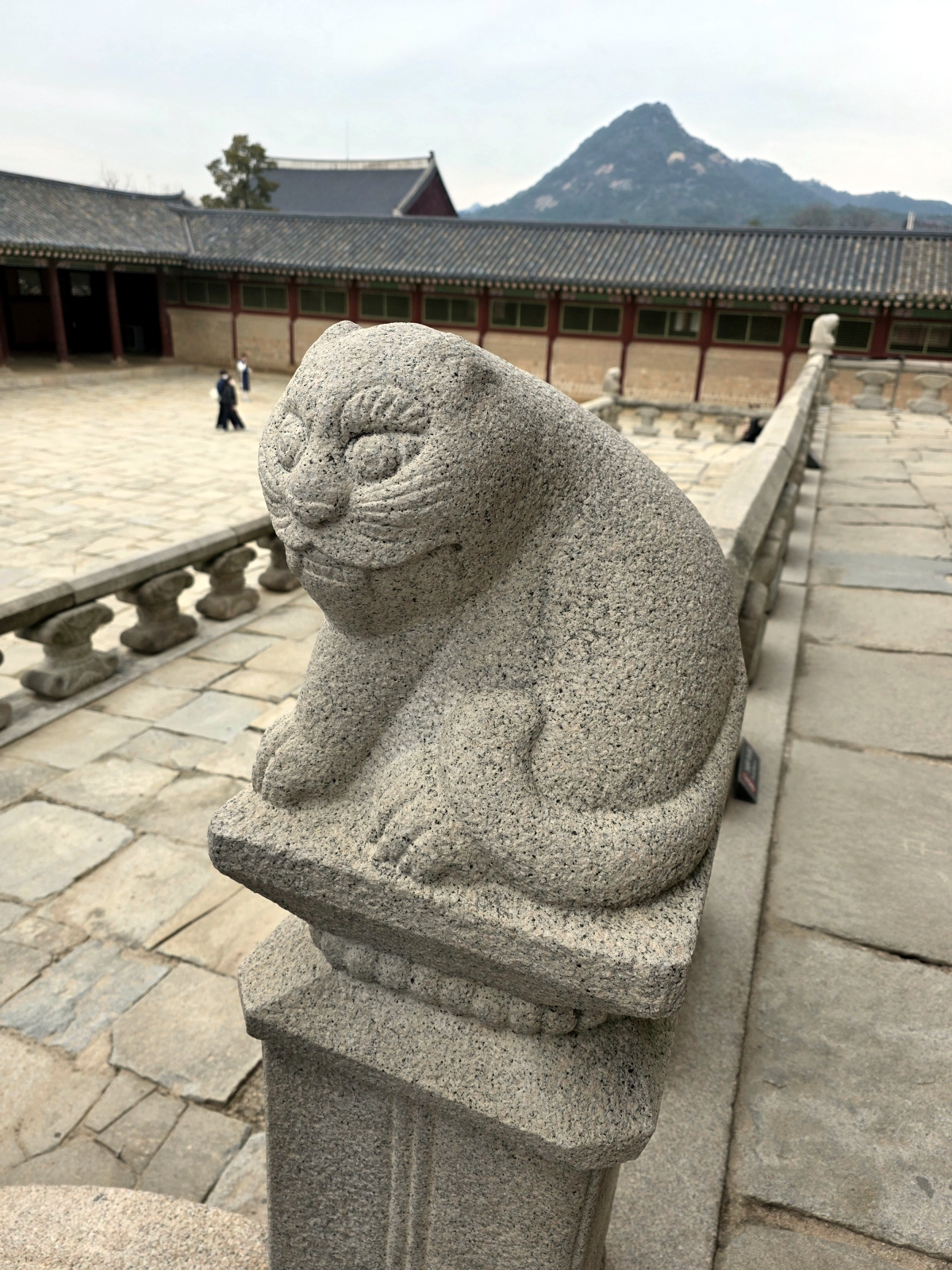
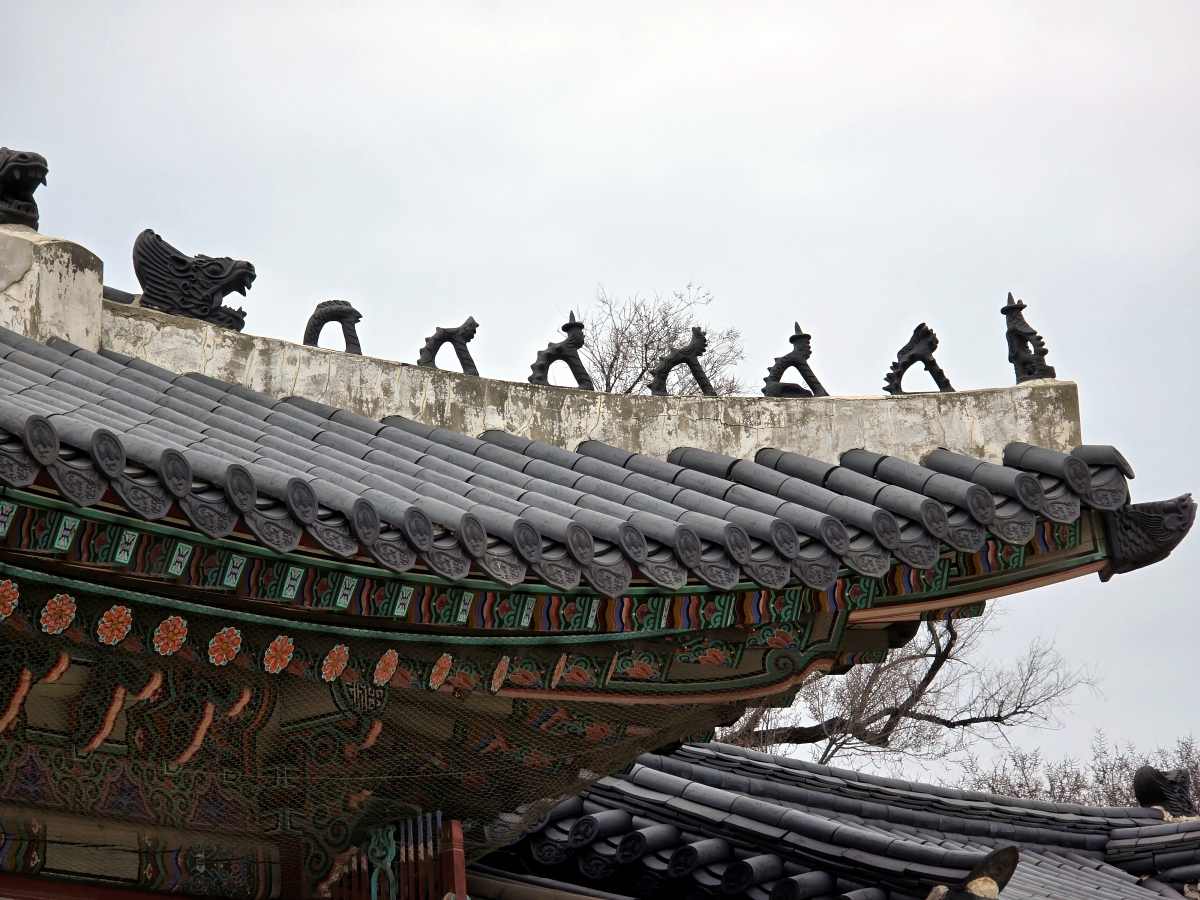
Around the palace grounds you may notice small sculptures of animals.
For example, some sculptures represent the twelve zodiac animals, which people believed protected the palace from negative energy.
For example, the white tiger represents protection of the western direction and is considered a guardian spirit.
Sajeongjeon Hall – The King’s Council Hall
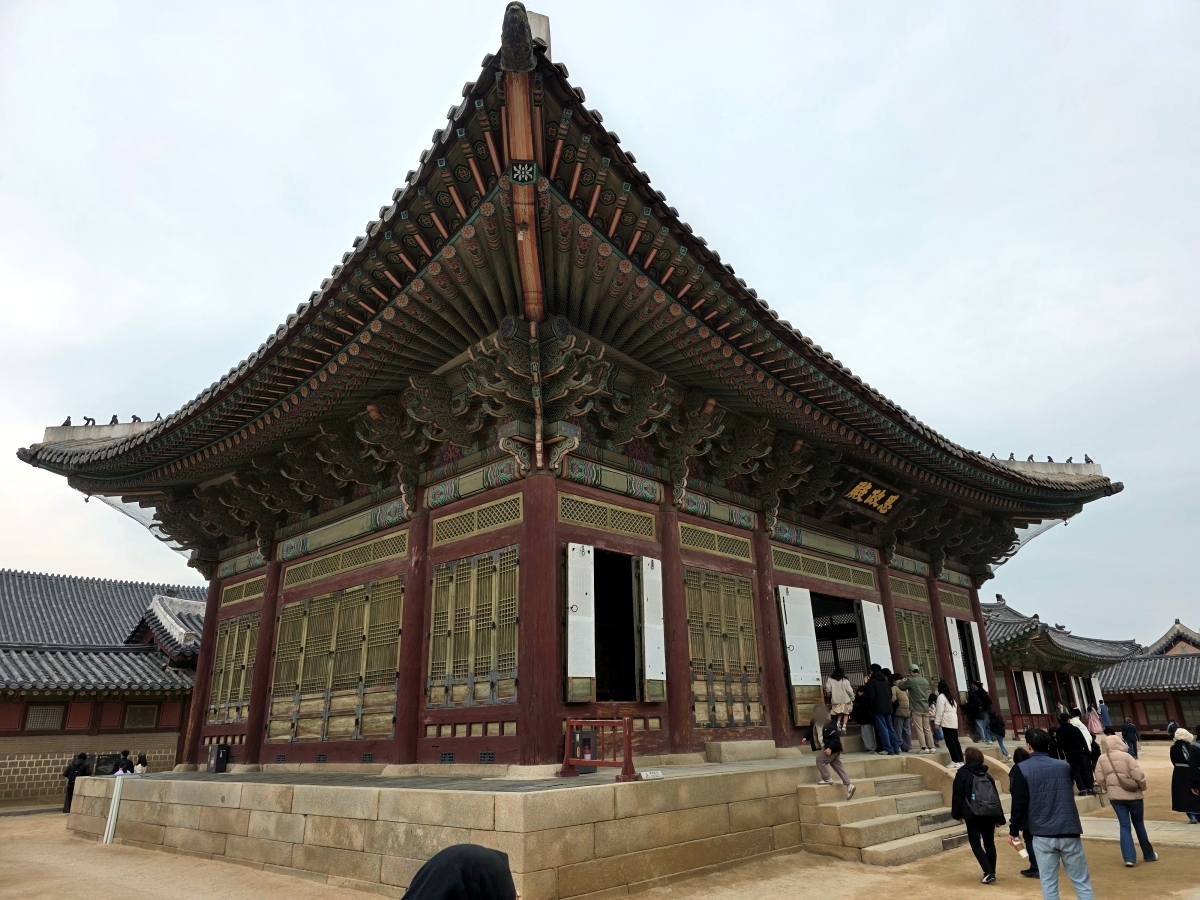
Sajeongjeon Hall served as the king’s main office where daily state affairs were discussed with officials.
While Geunjeongjeon was used for formal ceremonies, Sajeongjeon functioned as a working space where the king reviewed reports and discussed government policies.
This hall represents the administrative heart of the Joseon Dynasty palace.
Gangnyeongjeon Hall – The King’s Living Quarters
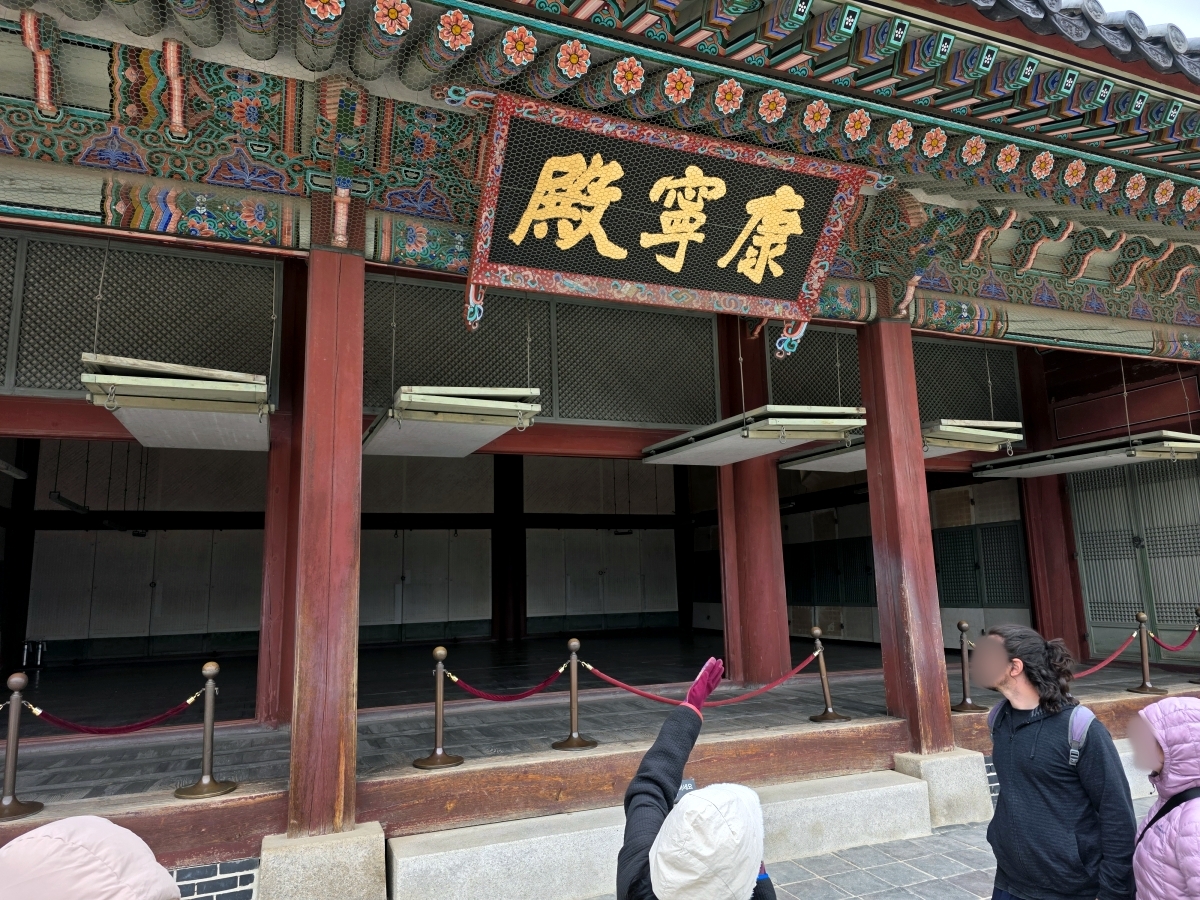
It was the main residence of the king within Gyeongbokgung Palace.
Unlike the ceremonial halls in the front courtyard, this area served as the king’s private living quarters. Here, the king rested and carried out his daily life inside the palace.
Gyeonghoeru Pavilion
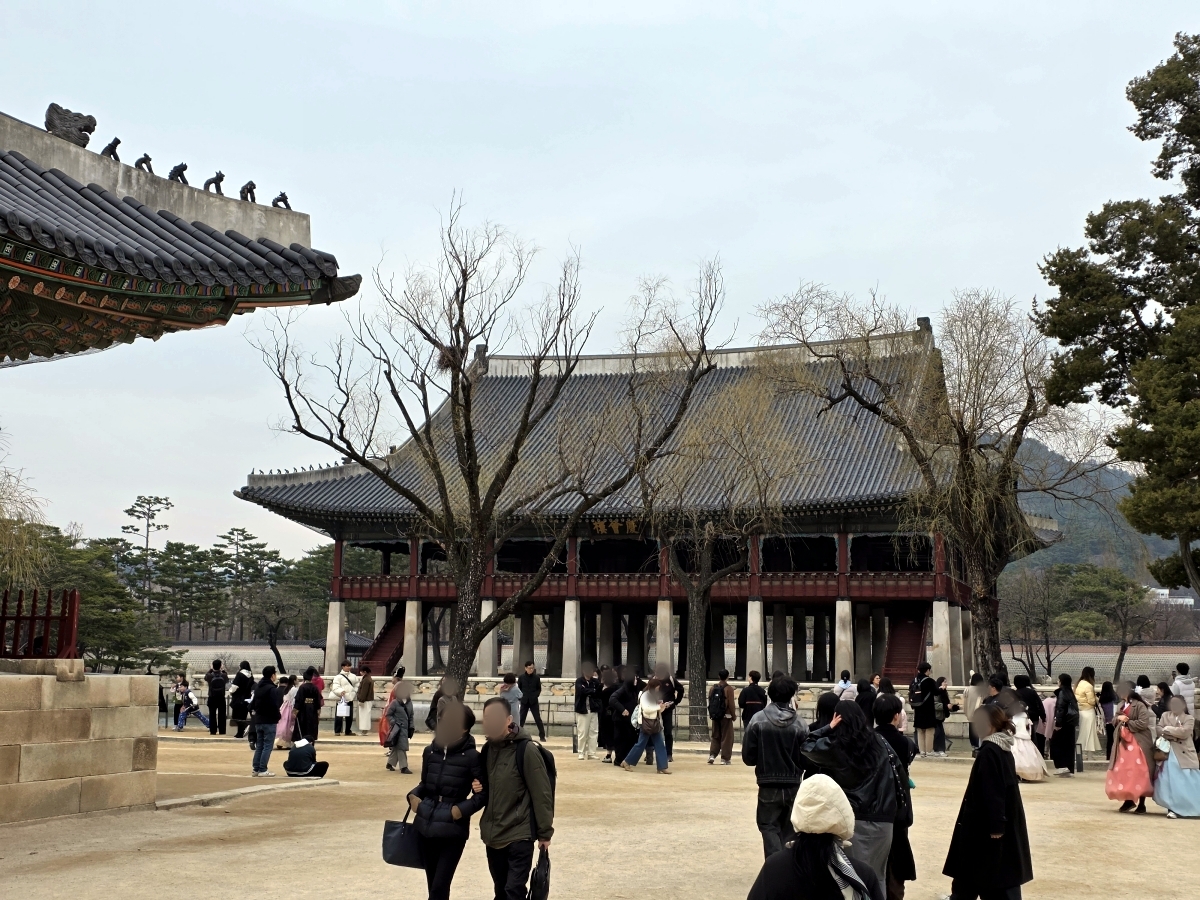
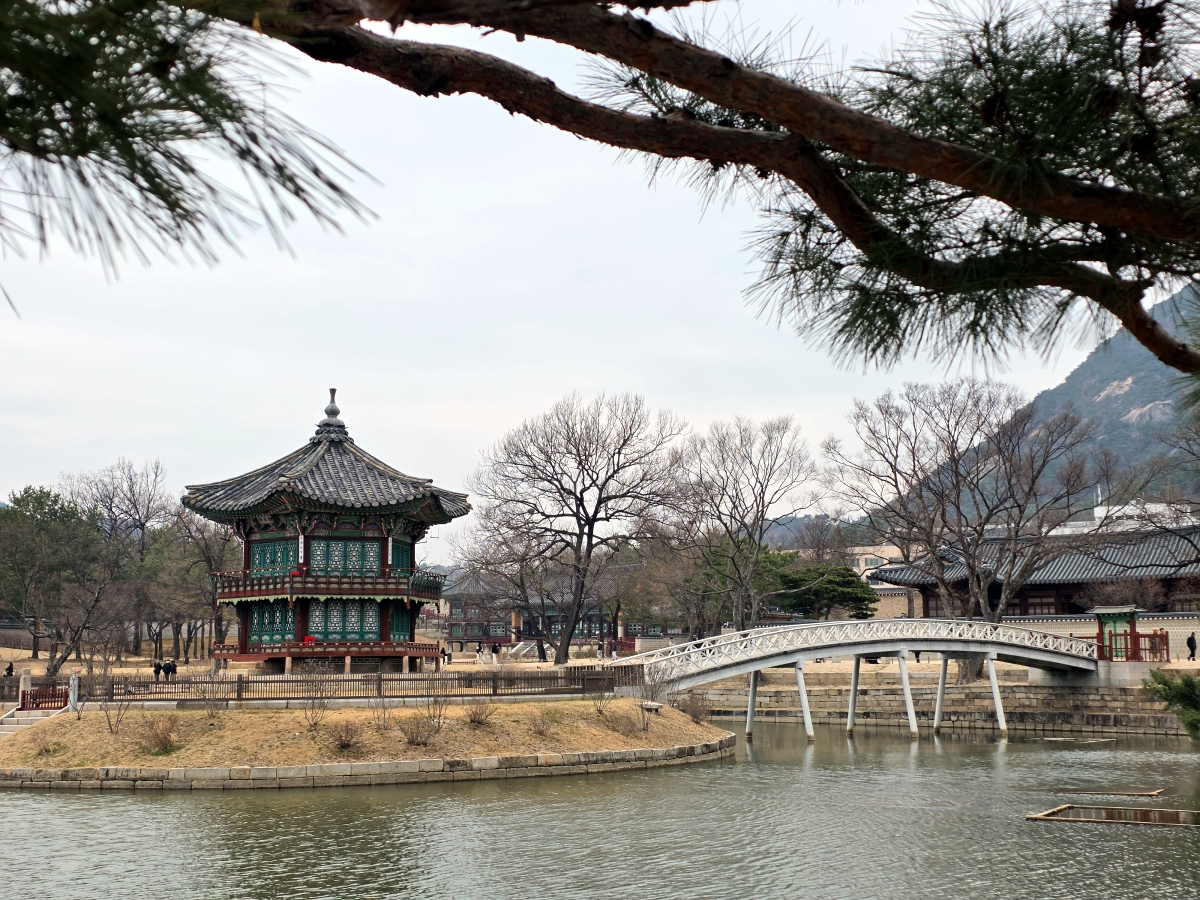
In particular, Gyeonghoeru Pavilion is one of the most iconic structures in Gyeongbokgung Palace. The pavilion stands on stone pillars in the middle of a large pond and hosted royal banquets and important receptions.
Kings of the Joseon Dynasty hosted foreign envoys and celebrated special events here.
The elegant reflection of the pavilion on the water makes it one of the most photographed spots in the palace today.
Gyotaejeon Hall – The Queen’s Residence
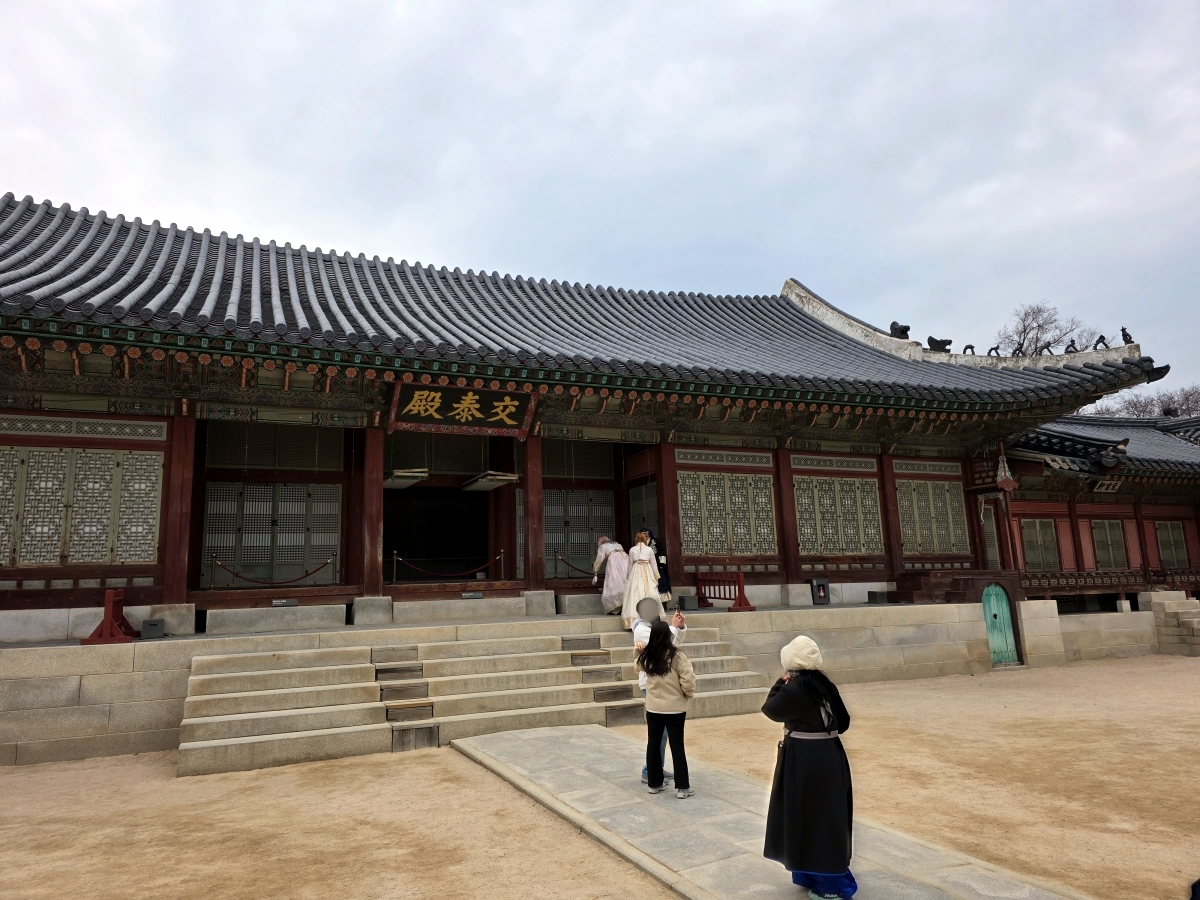
Gyotaejeon Hall served as the residence of the queen.
Located behind the king’s quarters, this area formed part of the inner court reserved for the royal family.
Traditional Korean Palace Architecture
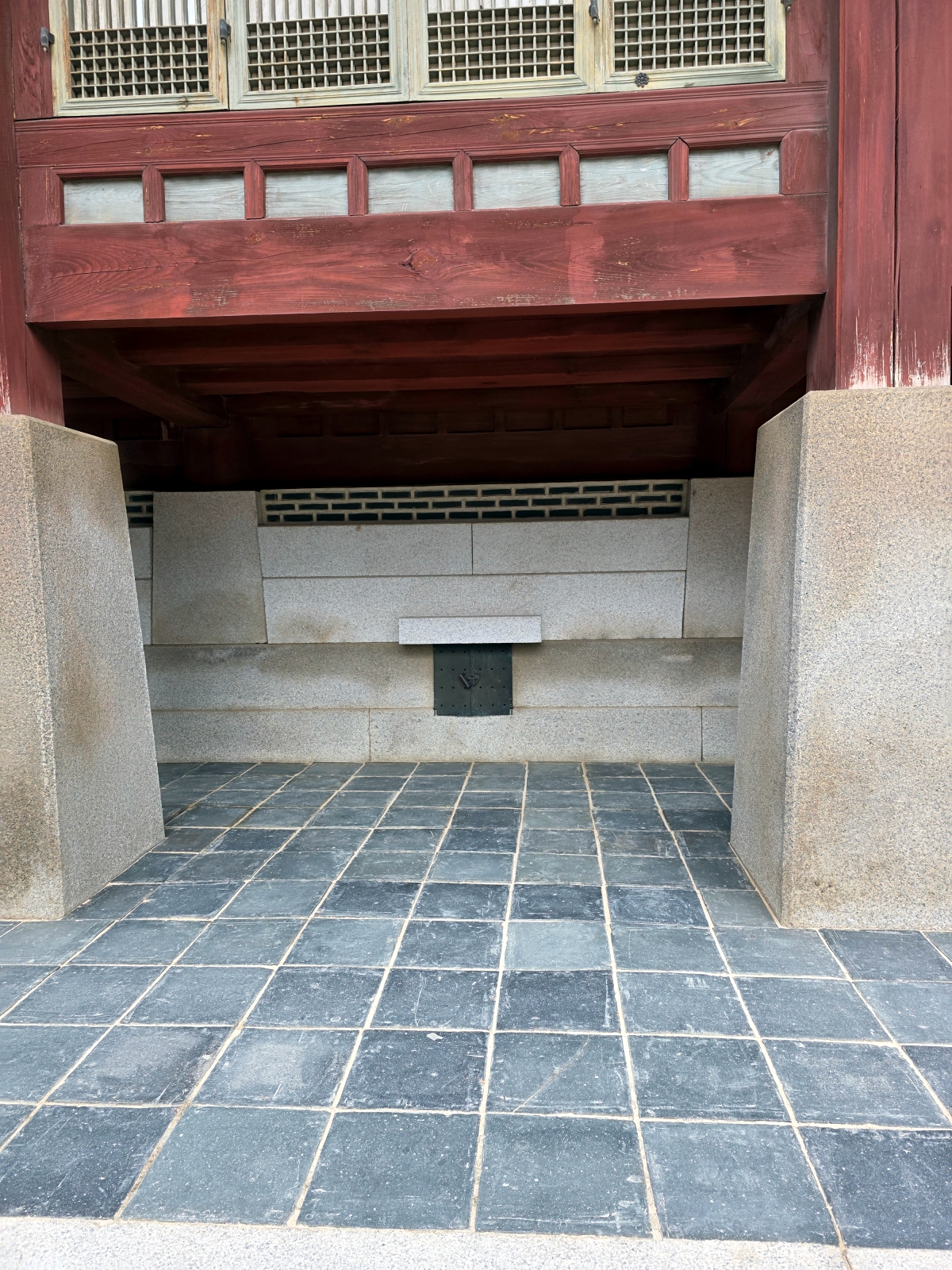
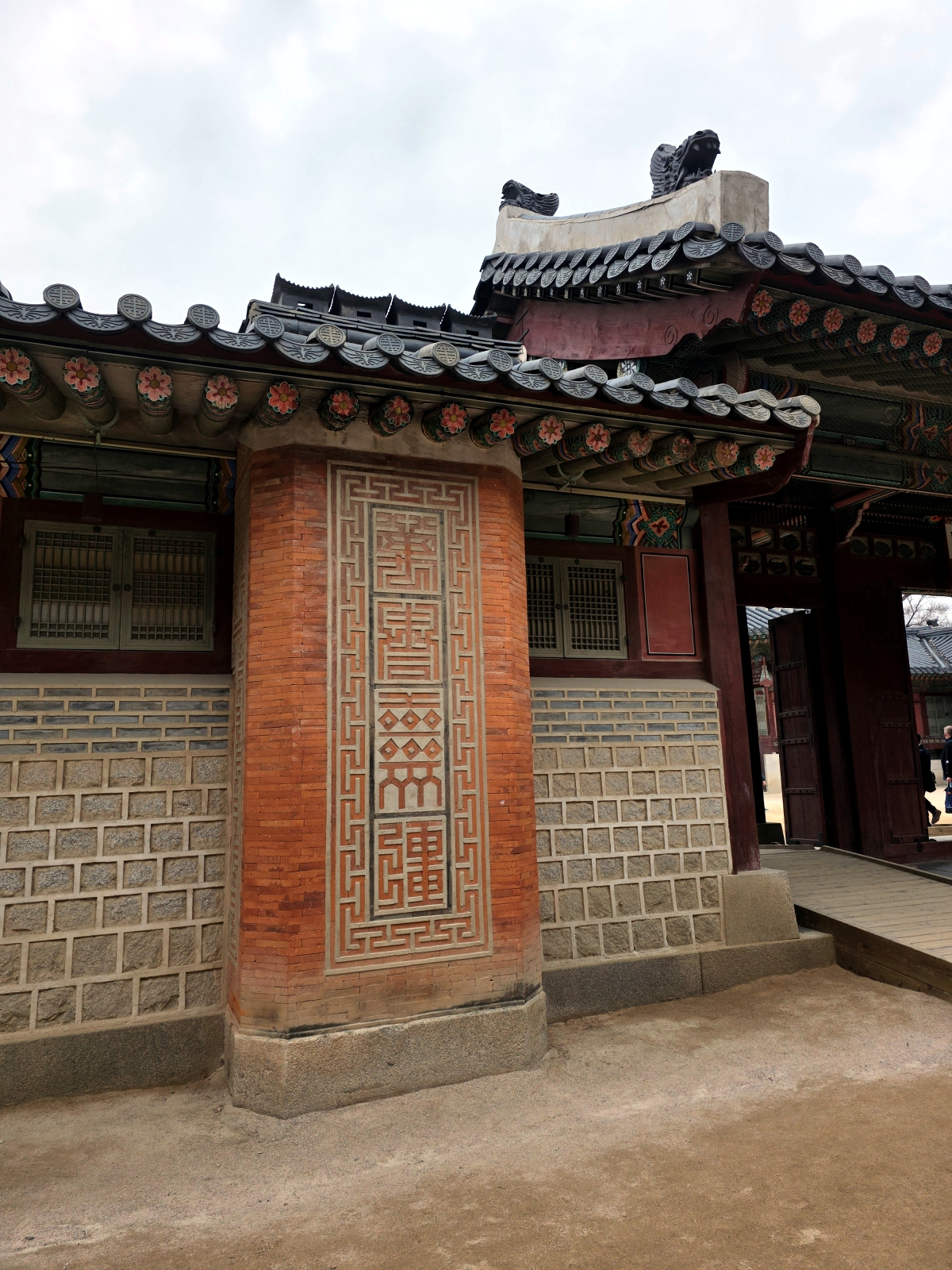
Traditional Korean palace architecture reflects the climate and lifestyle of the Joseon Dynasty.
Ondol is a traditional underfloor heating system used during winter.
Maru is a raised wooden floor that allows air circulation during hot summers.
Visitors can clearly see these features in the royal living quarters such as Gangnyeongjeon and Gyotaejeon.
Conclusion
The Joseon Dynasty ruled Korea for more than 500 years from 1392 to 1910, and Gyeongbokgung Palace was the center of royal authority during that time.
Although much of the palace was damaged during later historical events, restoration projects have brought many of the buildings back.
If you are visiting Seoul, joining the Gyeongbokgung Palace guided tour is one of the best ways to understand the palace beyond simply taking photos.
With a guide explaining the history and stories behind each location, the palace becomes a much richer experience.
Frequently Asked Questions (FAQ)
No reservation is required. You simply need to buy an entrance ticket (or enter for free wearing a Hanbok) and wait at the meeting point inside the palace before your scheduled time.
No, the palace is strictly closed every Tuesday. Please keep this in mind when planning your itinerary, as many tourists mistakenly visit on Tuesdays.
The tour starts inside the palace, not at the outside ticket office. After passing through the ticket inspection area at Heungnyemun Gate, turn immediately to your right. You will find the Information Center where the guide and group will be waiting.
If you are wearing a traditional Korean Hanbok, your entrance is completely free. You do not need to stop at the ticket office—just walk straight to the main gate for inspection.
The official guided tour typically lasts about 1 to 1.5 hours. The walking paths are mostly flat, but since the palace grounds are very large and there is a lot of outdoor walking, wearing comfortable shoes is highly recommended.
The palace offers guided tours in several languages including English, Japanese, Chinese, Spanish, and French. English tours run multiple times per day, while other languages usually have fewer sessions depending on the day.